Earth Fortresses: The Defensive Communal Architecture of Fujian Tulou
Imagine stumbling upon a colossal earthen fortress in the lush mountains of southeastern China—looking remarkably like a grand wooden colosseum or a landed UFO. These are the Fujian Tulou, the extraordinary communal homes of the Hakka people. Recognized as a UNESCO World Heritage site in 2008, these architectural marvels beautifully embody the Eastern philosophy of harmony between humanity and nature.
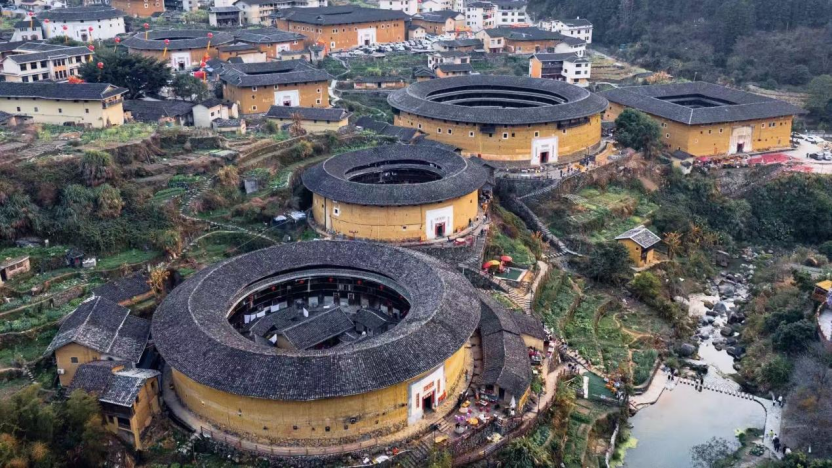
Emerging during the Song and Yuan dynasties, these multi-story fortresses were built for survival during times of migration and unrest. Much like medieval European castles, they were designed to fend off bandits and conflicts. Craftsmen ingeniously rammed earth mixed with sand, stone, and bamboo wall bones, even adding sticky rice and brown sugar for unparalleled binding strength! With outer walls up to two meters thick and no ground-floor windows, a single Tulou was an impenetrable fortress that was naturally fireproof, earthquake-resistant, and climate-controlled.

Yet, the true magic of the Tulou lies in its core principle: defending the outside, uniting the inside. Unlike feudal structures that emphasized class hierarchy, Tulou reflects profound equality. Inside the iconic circular or square rings, every family's living quarters are identical. At the very center lies the ancestral hall—the spiritual heart where the entire clan gathers to honor their roots.
Often called Hakka museums without gates, iconic sites like the visually striking Tianluokeng cluster or Eryi Lou, known as the King of Tulou, offer visitors a rare glimpse into a self-sustaining micro-society. They stand today as a masterful blend of impregnable defense and deep familial harmony.