The Leshan Giant Buddha: World's Largest Stone Statue
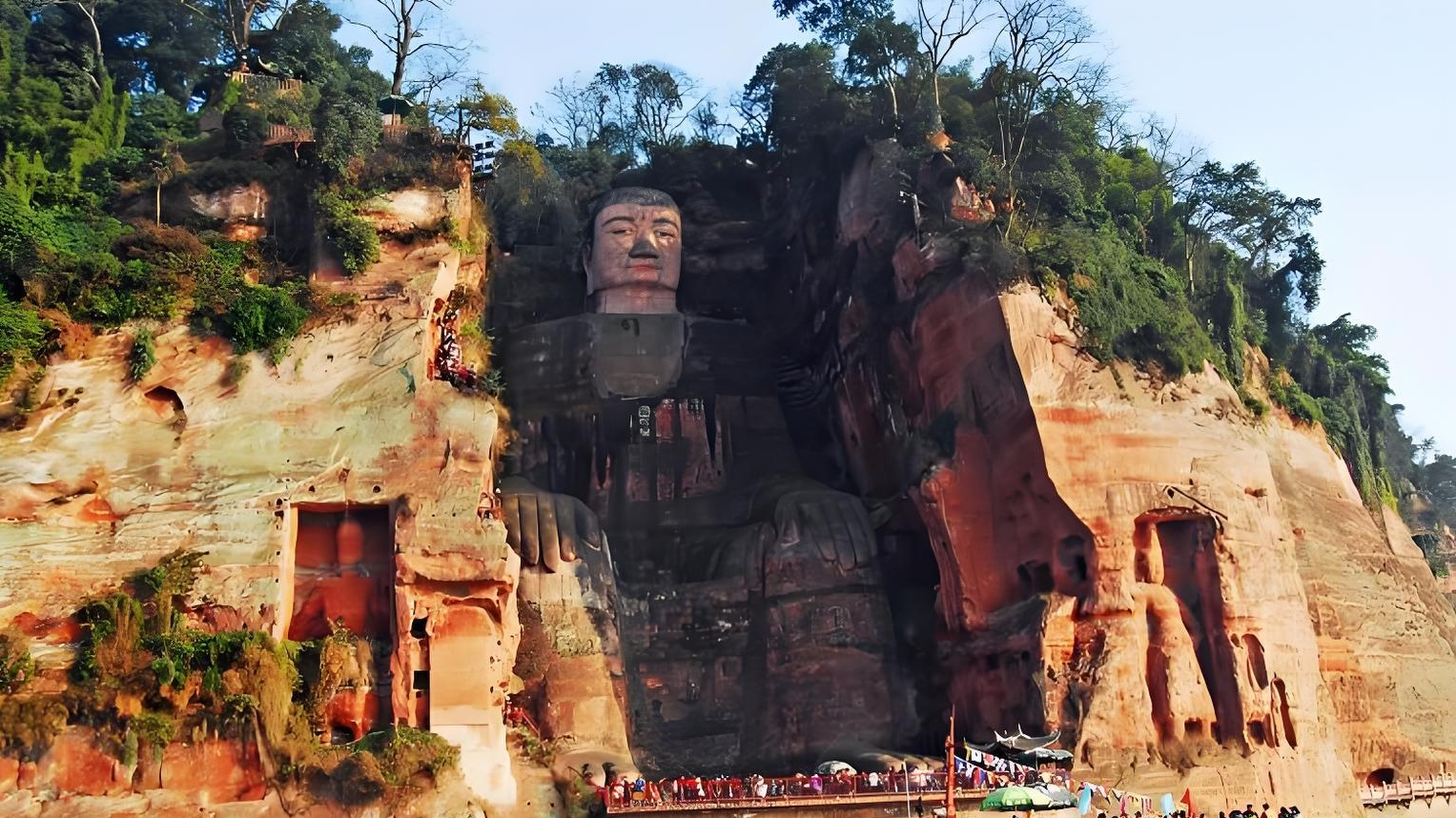
Rising 71 meters above the confluence of three rivers in Sichuan Province, the Leshan Giant Buddha (乐山大佛) is the largest stone-carved Buddha in the world. Carved into a red sandstone cliff face, the seated figure depicts Maitreya (弥勒佛), the Buddha of the future, his hands resting on his knees as he gazes serenely across the water. Construction began in 713 CE during the Tang Dynasty, initiated by a monk named Haitong who hoped the statue's presence would calm the dangerous river currents below.
The scale of the Leshan Buddha is almost impossible to grasp until you stand before it. His shoulders are 28 meters wide; his ears alone are 7 meters long; each toenail is large enough for a person to sit on. The project took over ninety years to complete, involving generations of workers and craftsmen. So much rock was excavated that the debris deposited into the river actually altered the water's flow — fulfilling, in an unexpected way, the monk's original intention.
Built into the statue is an ingenious drainage system of hidden channels carved into the hair, collar, and ears, which carry rainwater away from the surface and have helped preserve the statue for over thirteen centuries. Despite this, the humid Sichuan climate has caused erosion over the years, and conservation efforts are ongoing to protect the statue's surface and the intricate carvings surrounding it.
In 1996, the Leshan Giant Buddha was inscribed as a UNESCO World Heritage Site together with the nearby Mount Emei. It draws millions of visitors each year who descend steep stone staircases cut into the cliff to view the statue from below. Standing at the base and looking up at the vast, weathered face, it is easy to understand why this place has inspired wonder and devotion for more than a thousand years.