Dazu Rock Carvings
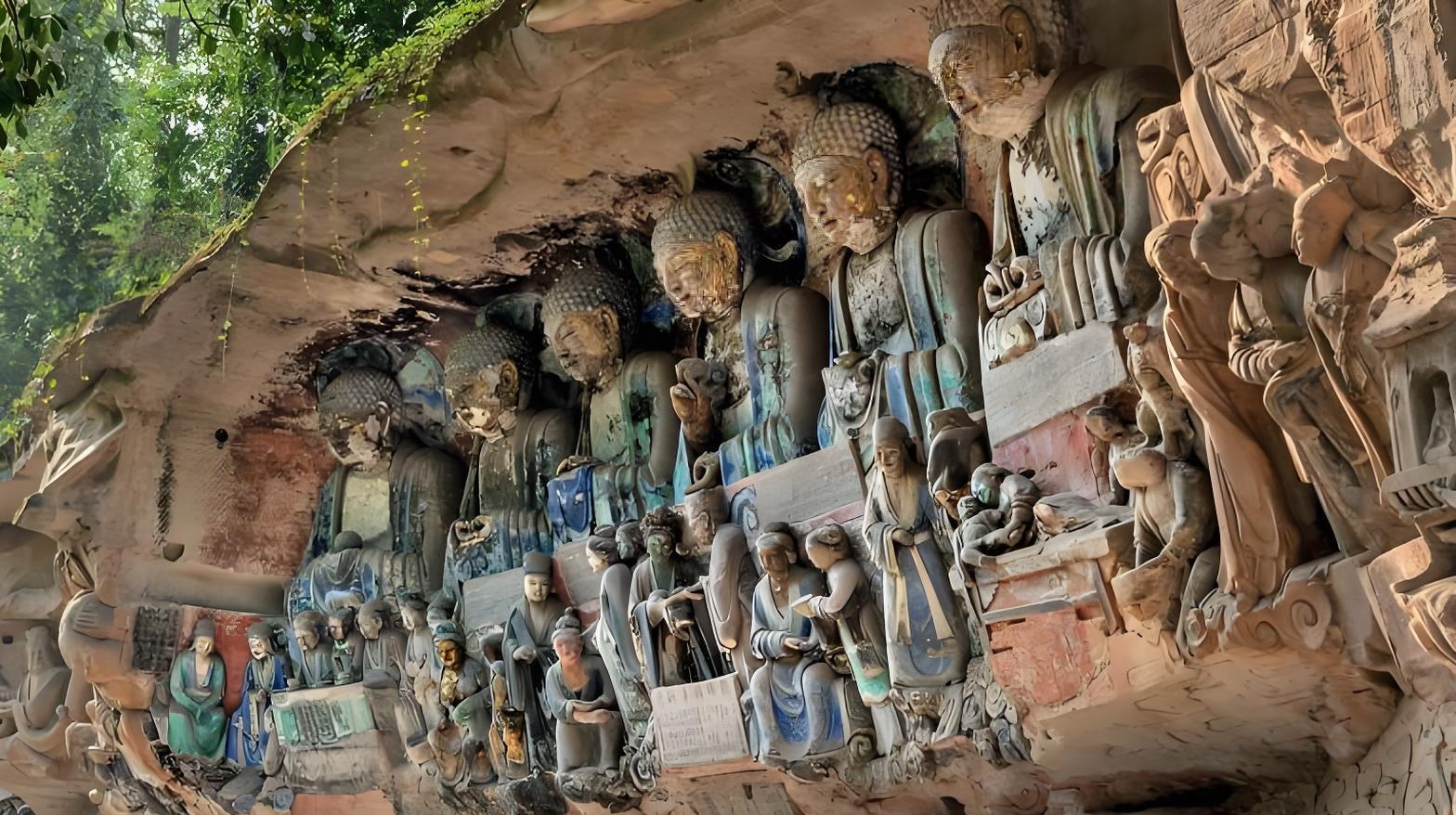
The Dazu Rock Carvings (大足石刻) are a remarkable collection of Buddhist, Taoist, and Confucian sculptures carved into cliffsides and hillsides in Dazu County, Chongqing Municipality. Created mainly between the 9th and 13th centuries during the Tang and Song dynasties, the site contains over fifty thousand stone statues spread across more than seventy protected locations, and was designated a UNESCO World Heritage Site in 1999.
What distinguishes Dazu from other famous Chinese grottoes is its strongly secular and narrative character. Rather than focusing purely on monumental Buddha figures, the carvings here depict vivid scenes from everyday life, moral fables, and stories combining religious teachings with practical lessons about filial piety, honesty, and community values. The sculptures feel less like distant divine icons and more like illustrated stories carved in stone for ordinary people to understand.
Among the most celebrated works is the Thousand-Hand Bodhisattva (千手观音), a breathtaking gilded sculpture of Guanyin with 830 hands radiating outward in a great golden fan. Another masterpiece is the Reclining Buddha (卧佛), a massive figure over thirty meters long, depicted peacefully entering nirvana. The carvings at Baoding Hill in particular are arranged in a continuous circular narrative stretching hundreds of meters.
Dazu's carvings are also notable for their exceptional state of preservation. The use of overhanging rock shelters and the quality of the original craftsmanship have protected the colors and details of many figures for nearly a thousand years. Today, Dazu remains an active place of pilgrimage and one of China's most extraordinary open-air museums of religious and cultural art.