Xuankong Temple: The Monastery Suspended in the Sky
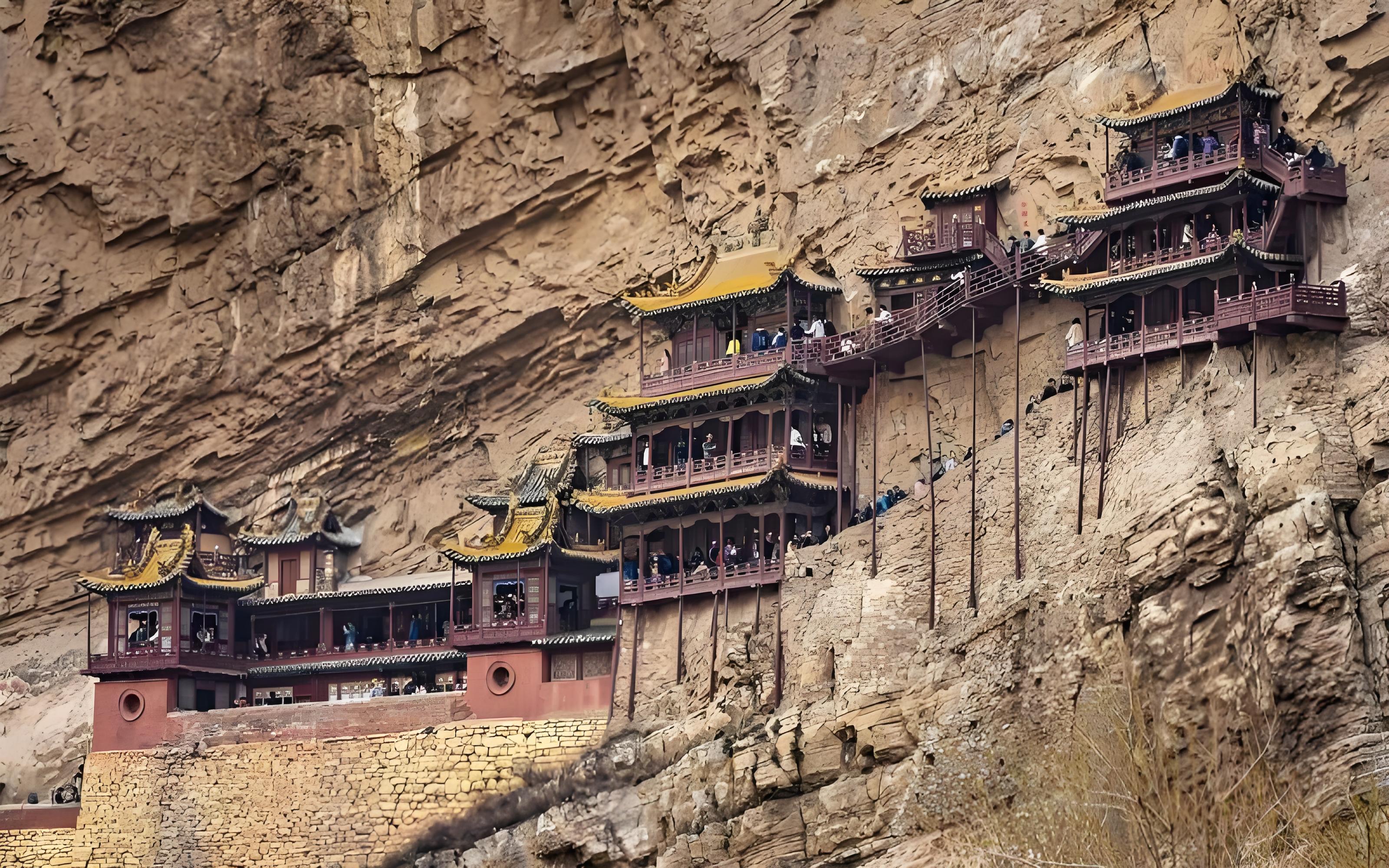
Clinging to the sheer face of Cuiping Peak near Mount Heng in Shanxi, Xuankong Temple appears to float between rock and sky. Also known as the Hanging Temple, it was first built in the late Northern Wei Dynasty, around the fifth century, and has survived for roughly 1,500 years. Instead of standing on a mountaintop or valley floor, the complex occupies a narrow recess in the cliff, its roofs, balconies, and walkways unfolding above the deep gorge below.
The secret of the temple lies in the way it uses the mountain itself as part of its structure. Heavy horizontal beams were inserted deep into holes cut in the rock, creating a firm base for the wooden buildings. The slender vertical poles visible from below are not the only supports; much of the weight is carried by the hidden beams and the interlocking timber frame. The overhanging cliff also shelters the temple from rain and strong sunlight, while the narrow valley helps reduce the direct impact of wind.
Despite its dramatic setting, the temple is a compact and carefully organized complex. A small courtyard and two multi-storey pavilions contain about forty halls and rooms, linked by narrow plank paths, stairways, and covered corridors. Moving through them feels like walking inside a three-dimensional maze, with spaces opening and closing as the route follows the natural contours of the cliff.
Xuankong Temple is equally remarkable for its religious inclusiveness. In the Hall of the Three Religions, statues of the Buddha, Laozi, and Confucius share one room, representing Buddhism, Taoism, and Confucianism. Today, the temple remains one of China's most extraordinary cliffside wooden buildings—a place where engineering, landscape, and belief have been joined with astonishing precision.