Rubbings: Bringing Stone Inscriptions Back to Paper
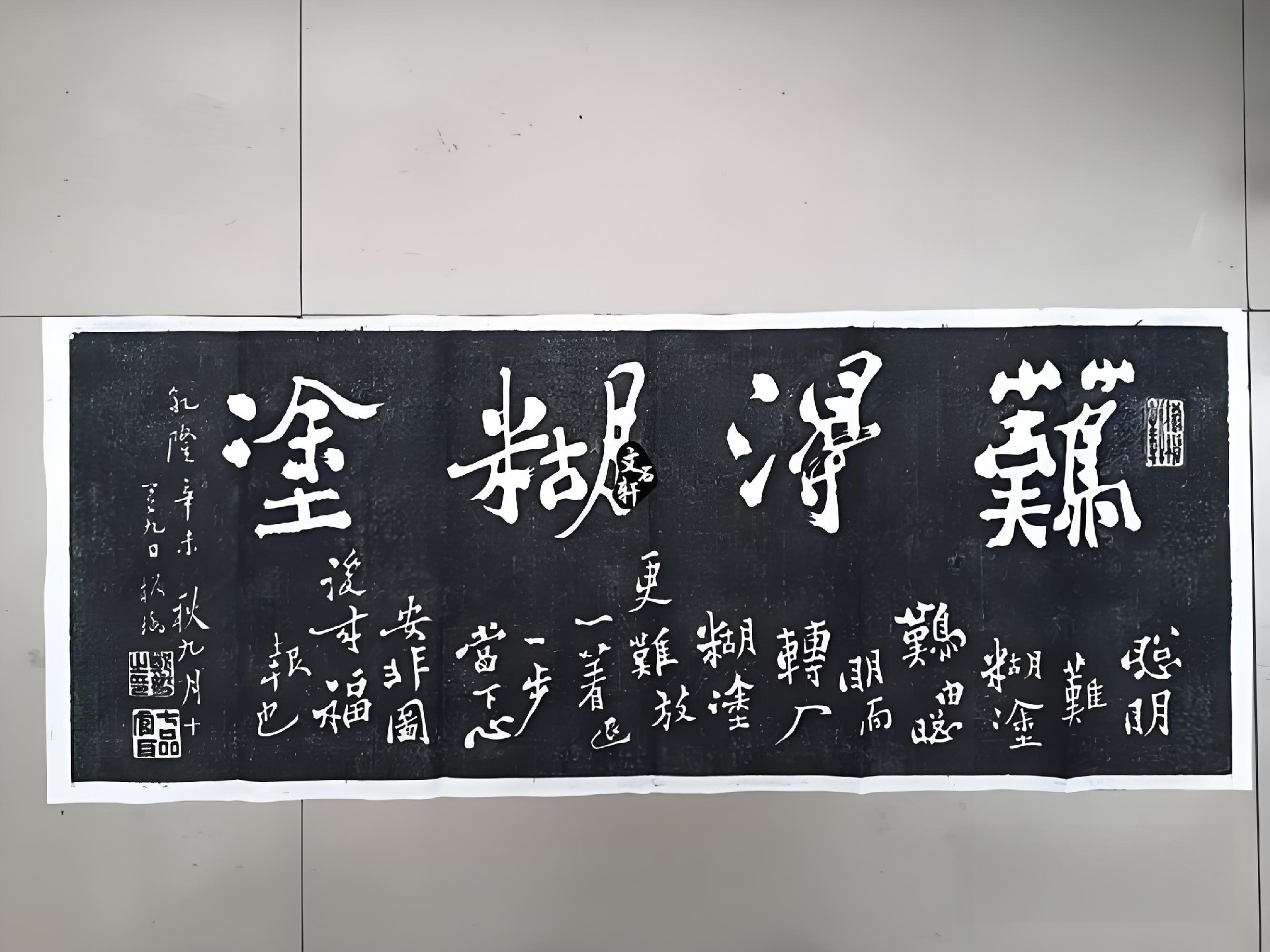
Rubbing is one of the most distinctive ways Chinese calligraphy has been preserved and shared across time. When important texts or calligraphic works were carved onto stone steles, cliffs or tablets, people developed a method to transfer those carved lines onto paper. By pressing damp paper onto the engraved surface and applying ink to the raised areas, they could create a black-and-white copy that captured the shape of the original inscription with remarkable clarity.
This process gave stone inscriptions a second life. Instead of traveling long distances to see a monument in person, scholars and collectors could study its writing from a rubbing. In that sense, rubbings worked almost like an early form of reproduction or printing—but with a strong material connection to the original surface. They allowed famous inscriptions to circulate widely while preserving the visual character of carved calligraphy.
Rubbings are valued not only for the words they record, but also for the texture they reveal. Broken edges, weathered lines and subtle variations in depth all become part of the final image. A rubbing is therefore more than a copy: it is also a record of time, surface and touch. It shows how Chinese calligraphy has long existed not only in brush and ink, but also in stone and paper.
For generations of readers, students and connoisseurs, rubbings opened a path into the world of ancient writing. They made it possible to learn from distant masterpieces, compare styles and keep the legacy of inscriptional calligraphy alive in everyday study.