Dunhuang Dance

Dunhuang Dance (敦煌舞) is a contemporary Chinese classical dance style inspired by the thousands of paintings and sculptures preserved in the Mogao Caves (莫高窟) near Dunhuang, Gansu Province. These caves, carved over a span of nearly a thousand years beginning in the 4th century, contain breathtaking murals depicting celestial beings, known as feitian (飞天), soaring through the air with flowing ribbons and graceful, otherworldly poses.
In the 1970s and 1980s, Chinese choreographers and dancers began a remarkable project to bring these painted figures to life on stage. By studying the angular tilted heads, bent wrists, S-shaped postures, and asymmetrical arm positions depicted in the murals, they developed a codified dance vocabulary that was entirely unlike existing Chinese dance styles, rooted instead in the aesthetic language of the ancient Silk Road.
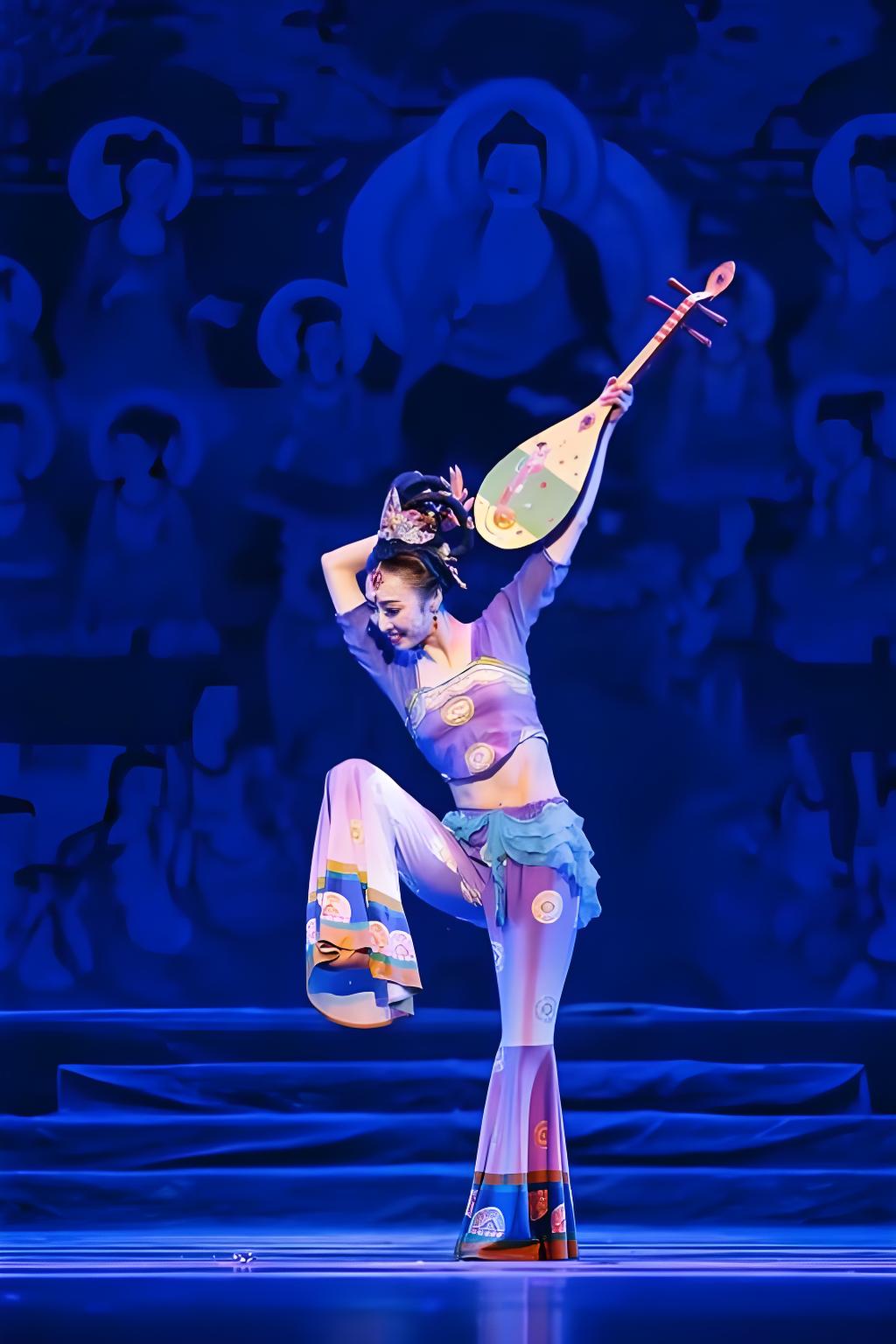
Dunhuang Dance is characterized by its distinctive body positions: the head tilts to one side, the chest curves gently, and the limbs form flowing, sculptural shapes that seem to freeze a moment of divine movement. Costumes typically feature long ribbon scarves, layered silk robes in jewel tones, and elaborate headdresses that echo the ornate figures painted on the cave walls over fourteen centuries ago.
Today, Dunhuang Dance is performed widely across China and on international stages, celebrated as a living bridge between ancient Buddhist art and modern choreography. Works such as the acclaimed dance drama "Silk Road Flower Rain" (丝路花雨) have introduced this graceful and visually distinctive style to global audiences, making it one of the most recognizable and treasured contributions of Chinese dance to the world.