Ink on the Move
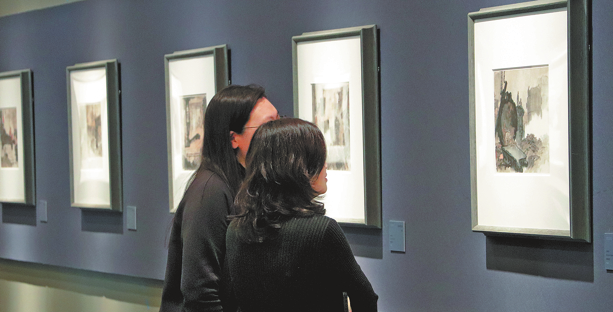
The works of Ya Ming (1924-2002), which focus on China's diverse and captivating landscapes, are on display at an exhibition at the Art Museum of Beijing Fine Art Academy. CHINA DAILY
Artist maps memory onto landscapes, where brushstrokes reshape how distant worlds feel, Lin Qi reports.
With Qingming Festival just past, the calendar quickly turns toward the Labor Day holiday, followed by Duanwu Festival in mid-June. A sequence of closely spaced holidays like this excites some people, while leaving others hesitating over their plans — whether to set out and embrace the gentle allure of spring, or remain at home, seeking moments of quiet, both physical and mental.
It is hard to say whether people in ancient times shared this same dilemma, but they coined a term that offers a different answer: woyou (wandering while lying down). Rooted in Taoist thinking, it describes a journey undertaken entirely in the mind, through the contemplation of landscape paintings. Gazing at mountains and rivers brought to life through expressive brushwork — often idealized yet vivid — was believed to nourish both spirit and body, especially when travel itself was constrained by distance or cost.
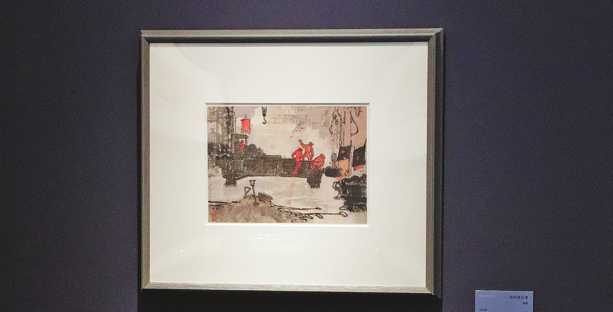
The works of Ya Ming (1924-2002), which focus on China's diverse and captivating landscapes, are on display at an exhibition at the Art Museum of Beijing Fine Art Academy. CHINA DAILY
In this sense, woyou provides a form of quiet compensation for those drawn to nature but reluctant to endure the fatigue of the road. It offers an alternative way to encounter landscapes, free from physical burden, yet rich in imagination.
Visitors to Speaking for Nature, an exhibition now underway at the Art Museum of Beijing Fine Art Academy, are invited into precisely such an immersive woyou experience. The show presents the works of Ya Ming (1924-2002), whose depictions of China's diverse and captivating landscapes unfold like an immersive journey across time and terrain.
Running through April 26, the exhibition brings together paintings and drawings from multiple collections, including the Jiangsu Traditional Chinese Painting Institute, where Ya Ming worked for many years; the Jiangsu Art Museum in Nanjing; the Ya Ming Art Museum in Hefei, his hometown in Anhui province; and several private collections.
The exhibition traces what might be called a painterly travelogue, rooted in a journey undertaken in the autumn of 1960. Over three months, Ya Ming, born Ye Jiabing, traveled with more than a dozen colleagues from the Jiangsu Traditional Chinese Painting Institute, according to Ma Wen, a member of the exhibition's curatorial team.
The works of Ya Ming (1924-2002), which focus on China's diverse and captivating landscapes, are on display at an exhibition at the Art Museum of Beijing Fine Art Academy. CHINA DAILY
Led by Fu Baoshi (1904-65), the institute's founding president and one of the most influential ink painters of the 20th century, the group set out in September on an ambitious expedition combining travel, observation and sketching from life. The team included established artists such as Ya Ming, alongside teachers and students from art academies, who both assisted the senior painters and took the opportunity to sharpen their own skills.
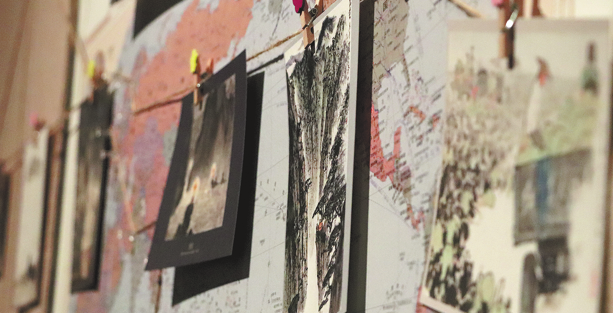
A map displayed in the exhibition outlines the route: departing from Nanjing, the group traveled northwest to Henan and Shaanxi provinces, then south to Sichuan province and Chongqing — at the time still part of Sichuan — before heading east through Hubei and Hunan provinces, and finally reaching Guangzhou in Guangdong province, before returning home. Along the way, they visited iconic landscapes such as the Sanmen Gorge in Henan, and the mountains of Huashan in Shaanxi and Emei in Sichuan, all of which remain popular destinations today.
Yet, the journey was not solely about scenic appreciation. It also carried a deeper artistic mission: to draw inspiration from nature while rethinking the methods and expressive possibilities of Chinese painting in response to the sweeping industrial, economic and social changes of the time. One striking example is a set of 10 sketches titled An Album of Iron and Steel, based on visits to steel plants in Chongqing and Wuhan in Hubei.
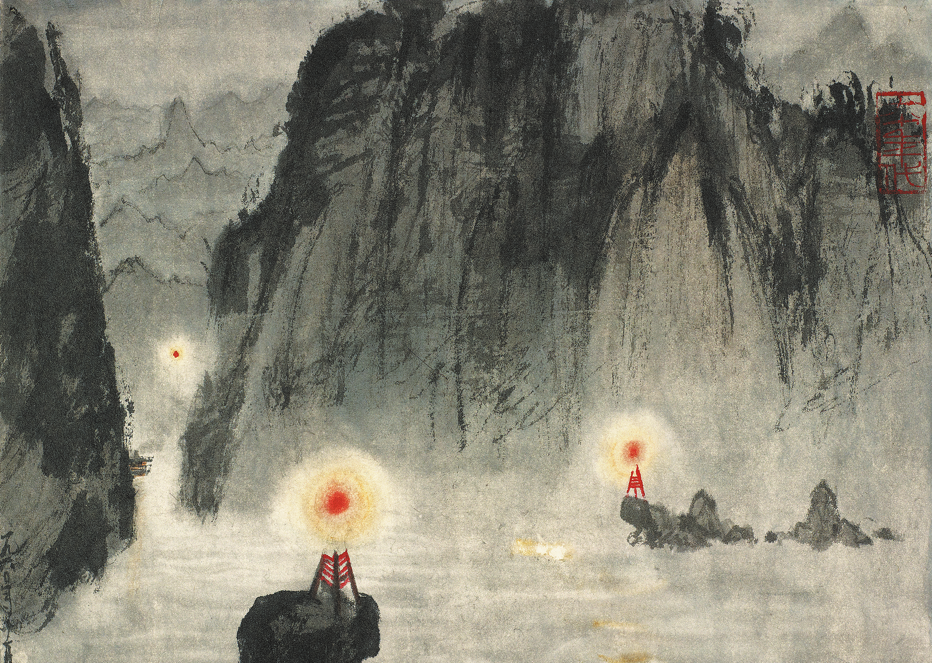
Ya Ming's ink paintings unfold like an immersive journey across time and terrain, such as Navigation at Night and Water Town in Autumn. CHINA DAILY
"The application of smudged colors combined with the use of blankness re-creates the industrious atmosphere of the smelting process," Ma says.
Ya Ming once noted that the works defied conventional categories. "They are neither traditional figure paintings nor landscapes, nor any other existing genre. They represent something entirely new, shaped by the era and real life."
When the group's works were exhibited in Beijing in 1961, they were met with enthusiastic acclaim from both critics and the public. The success of the exhibition helped inspire the emergence of the New Jinling School, a modern reinterpretation of a historical tradition rooted in Nanjing, once known as Jinling.
While the original Jinling School of the 17th century emphasized personal expression and retreat into nature, artists such as Fu and Ya Ming expanded its scope, introducing new subjects and approaches that reflected contemporary realities.

Ya Ming's ink paintings unfold like an immersive journey across time and terrain, such as Navigation at Night and Water Town in Autumn. CHINA DAILY
The exhibition also includes works created during Ya Ming's travels abroad, many executed using traditional Chinese brushes and ink.
Through these pieces, the artist explored landscapes beyond China, demonstrating that the expressive language of Chinese painting could extend across cultures and geographies. As he observed, the essence and character of landscapes from different regions can all be conveyed through the same artistic medium. Chinese painting, he believed, is not confined by national borders, but is capable of capturing the forms, atmospheres and customs of the wider world. In his words, it allows the artist to "speak for the mountains and rivers".
For Ma, the works on display function almost like "messages carried across time". From depictions of China's rivers and peaks to sketches of distant lands, they resemble postcards sent from another era — fragments of journeys that continue to resonate today. They invite viewers to share in the places Ya Ming visited, the scenes he encountered, the reflections he gathered along the way, and the joy of making new friends.
Xue Liang, director of the Art Museum of Beijing Fine Art Academy, notes that the exhibition forms part of the institution's ongoing 20th-century Chinese art masters series. "It's long-term research, with focused exhibitions that begin with individual artists, extend to their contemporaries, and situate them within the broader currents of their time. Through this process, we are able to feel the pulse of modern Chinese art."