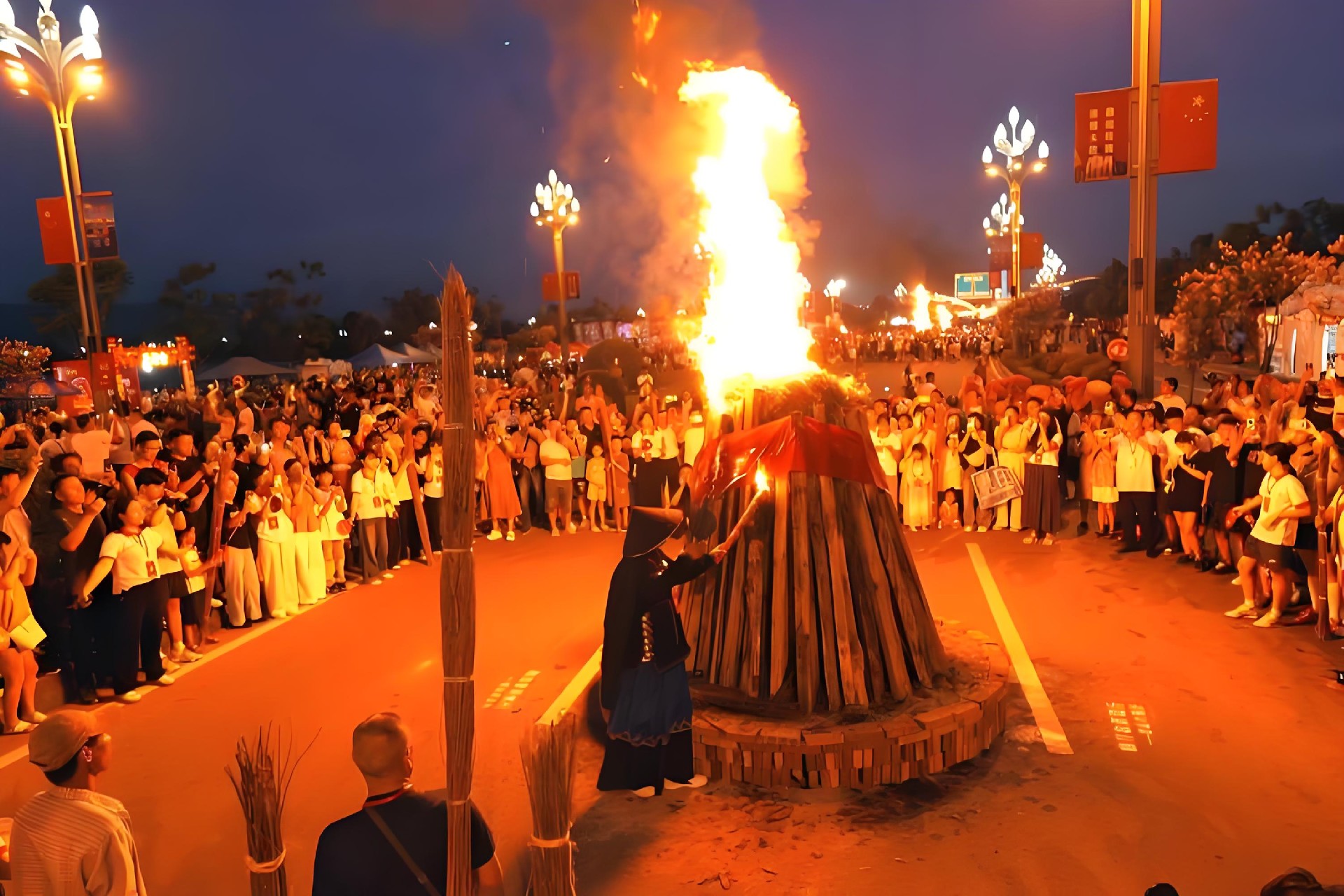
The Torch Festival(火把节)is one of the most vibrant traditional celebrations among several of China’s ethnic groups, especially the Yi people. Usually held in summer, it is a festival of fire, community, and shared joy. As night falls, people light torches, gather in open spaces, and celebrate with song, dance, and festive rituals. In spirit, it resembles midsummer fire festivals in other parts of the world, where flames symbolize energy, protection, and renewal.
The most striking image of the festival is, of course, fire itself. Long lines of torches glow against the night, creating a dramatic and unforgettable scene. In some places, people circle the flames, while in others they carry torches through fields and villages. Fire is believed to drive away misfortune and bless both people and harvests. Much like candles in seasonal ceremonies elsewhere, these flames are more than light—they are symbols of hope and well-being.
But the Torch Festival is not only about ritual—it is also a celebration of community life. Singing, dancing, wrestling, horse racing, and other festive activities often take place during the day and into the evening. Traditional dress, local music, and shared food all help turn the festival into a powerful expression of ethnic identity and collective memory. It is not simply a performance to be watched, but a living tradition shaped by participation.
Today, the Torch Festival remains one of the most distinctive windows into the culture of China’s ethnic minorities. It brings together ancient symbolism, seasonal rhythm, and the warmth of communal celebration. For anyone hoping to understand the diversity and vitality of Chinese folk traditions, the Torch Festival offers a scene that is both dazzling and deeply rooted.