Five-Color Glutinous Rice: A Rainbow of Ethnic Traditions
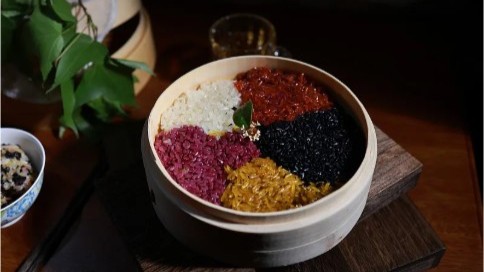
Five-Color Glutinous Rice stands as an iconic festive dish of the Zhuang people in Guangxi, celebrated for its vibrant hues and symbolic cultural significance. With origins tracing back over a thousand years to the Tang Dynasty, it was originally created as an offering to honor ancestors and celebrate the March 3 Festival, using natural dyes derived from local plants—turmeric for yellow, purple rice grass for purple, red and blue from other botanicals. The rice is visually stunning and subtly fragrant—the colors representing mountain, water, earth, sky, and harvest, while the natural dyes impart a delicate herbal aroma to the sweet glutinous grains.
What distinguishes this dish is not only its striking appearance but also its deep cultural roots. It embodies the Zhuang philosophy of harmony with nature, where each color carries blessings: yellow for prosperity, purple for longevity, black for stability, red for passion, and white for purity. Traditionally served during festivals and weddings, it symbolizes the unity between humans and the natural world. Today, it remains an essential part of ethnic celebrations, particularly during spring festivals.
Now, Five-Color Glutinous Rice is not just a traditional delicacy but a cultural emblem of Guangxi's ethnic diversity. From village celebrations to urban festivals, it has gained recognition nationwide through cultural promotions and packaged versions. This dish is more than food—it's a palette of Guangxi's ethnic harmony and ancestral wisdom.