Heritage Grid | The Unfound Tomb, the Enduring Mystery of Genghis Khan's Final Resting Place
Deep in the heart of Asia lies one of history's greatest secrets—a secret guarded by silent mountains, ancient rituals, and the deliberate silence of an empire. For over eight centuries, the location of Genghis Khan's tomb has remained a profound enigma, a riddle wrapped in mystery inside an enigma. While magnificent mausoleums mark the graves of other conquerors, the final resting place of the man who forged the largest contiguous land empire the world has ever known has vanished without a trace. Yet, in the rolling grasslands of Inner Mongolia, a sacred site known as the Genghis Khan Mausoleum stands as a powerful, living testament to his legacy.
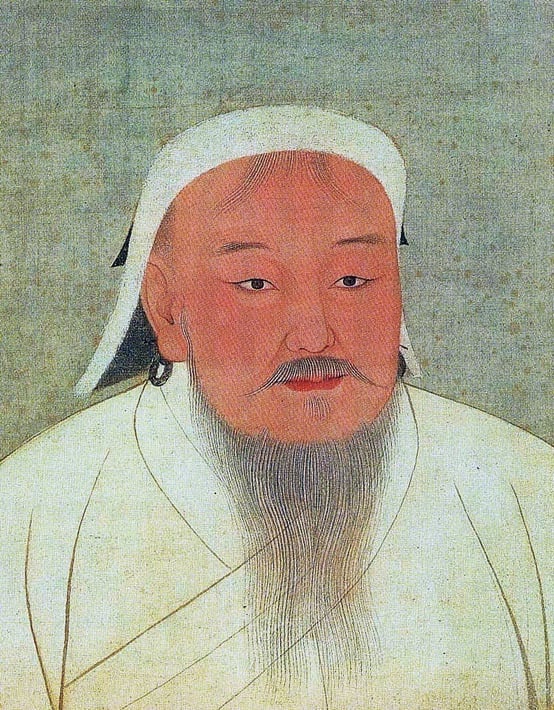
▲The portrait of Genghis Khan
The Mausoleum That Is Not a Tomb
The Genghis Khan Mausoleum in Ordos, Inner Mongolia of China, is a site of immense cultural and spiritual significance, but it is critical to clarify its nature from the outset. According to historical consensus, it is not a tomb containing the Khan's remains, but a cenotaph—a symbolic shrine and sacrificial centre. Its origins are tied to the Mongol Eight White Tents, mobile shrines dedicated to Genghis Khan's memory. In 1956, a permanent, grand mausoleum complex was constructed on this site to enshrine these traditions.
The site is rather far from an empty symbol. It houses priceless relics of profound spiritual importance, most notably the Sulde (spirit banners) and precious artifacts believed to be associated with the Khan. For nearly 800 years, its rituals have been safeguarded by the Darkhad, a dedicated tribe of guardians ordained by Genghis Khan's own family. Their unbroken lineage of protection and daily ceremonies makes this mausoleum the authentic and globally recognised spiritual heart of Mongol culture.

▲Genghis Khan Mausoleum
The Archaeological Grail: The Hunt for the True Tomb
The mystery of the physical tomb stems from the Mongols' strict "secret burial" tradition. After he died in 1227, historical accounts state that Genghis Khan was buried in a concealed grave in a chosen area of the Khentii Mountains of Mongolia (historically called Burkhan Khaldun or the Qinian Valley), his beloved homeland. The funeral procession executed all witnesses, trampled the ground with horses to erase traces, and let the landscape reclaim the site. The goal was absolute secrecy to protect the sanctity of the grave from desecration.
This has not stopped the search. The quest has been called the "holy grail of archaeology," attracting explorers, scholars, and technologies from satellite imagery to ground-penetrating radar. The most significant modern breakthrough came in the early 2000s. A joint archaeological project, The Valley of the Khans, led by Dr Albert Yu-Min Lin, identified a promising site in the Khentii Province. Using non-invasive technologies, they discovered what appeared to be a large, man-made structure underground at a location called The Great Taboo.
However, this is where history, ethics, and modern sentiment collided. The Government of Mongolia halted all excavation plans in 2022. The reasons were multifaceted and powerful: profound cultural respect for the ancestor, fear of a "curse," a desire not to disturb a sacred national site, and concerns over ecological impact. Thus, the most promising lead remains respectfully untouched, preserving the mystery and reinforcing the Mongol tradition that the great Khan's sleep should not be disturbed.
The Value of a Mystery and the Meaning of a Shrine
The unresolved search and the active shrine together create a unique legacy with multi-layered significance.
For the Mongol People, the Ordos Mausoleum is the undeniable spiritual nucleus of Mongol identity. It transcends politics and borders, serving as a living bridge to their imperial past and a core symbol of unity, strength, and cultural continuity. The undiscovered true tomb, meanwhile, remains a sacred national treasure in the landscape of Mongolia, a symbol integrated into the very soul of the country. As a Global Historical Enigma, the unbroken secret represents a stunning historical success. It highlights a cultural practice that has completely defied centuries of curiosity and advanced technology, reminding us that some historical truths are meant to be guarded by tradition and landscape, not uncovered by science.
Genghis Khan's legacy is foundational to the history of China and Eurasia. The empire he founded, later formalised as the Yuan Dynasty, is recognised as a critical period that ended centuries of fragmentation and significantly shaped the territorial and multi-ethnic contours of modern China.