
Heritage Grid | A Model of Lingnan Ancestral Architecture: Guangzhou's Chen Clan Ancestral Hall
The Chen Clan Ancestral Hall (also known as the Chen Clan Academy) in Guangzhou stands as an outstanding representative of the perfect integration of clan culture and architectural artistry in Guangdong during the Qing Dynasty. Its construction background, architectural form, and decorative craftsmanship vividly reflect the social structure and aesthetic pursuits of the Lingnan region in the late Qing period.
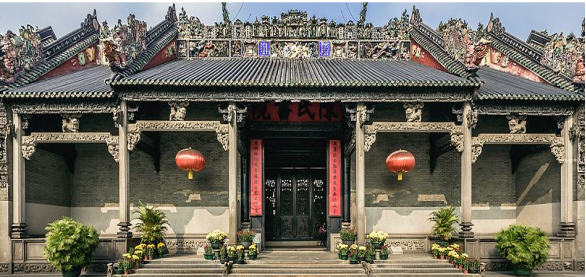
During the mid-to-late Qing Dynasty, Guangzhou served as a crucial commercial and administrative center in southern China. To facilitate clan members traveling to the provincial capital for examinations, legal matters, and other business, various clans established joint ancestral halls in the city. After the Qianlong reign, to circumvent official bans on joint ancestral halls, such buildings were often renamed academies or examination lodges.
In the 14th year of the Guangxu reign (1888), 48 Chen lineage gentry, including Chen Lanbin, the former minister to the United States, initiated the establishment of a construction committee. They identified Chen Shi (Grand Guardian) of the Han Dynasty as their common ancestor and raised funds through donations for memorial tablets, uniting Chen clans from 72 counties across Guangdong. The project was completed in the 19th year of Guangxu (1893). The finished Chen Clan Ancestral Hall served both as a place for ancestor worship and as accommodation for Chen clansmen visiting Guangzhou.
Covering 15,000 square meters, the Ancestral Hall follows the typical Lingnan ancestral temple layout of three rows, three pathways, nine halls, and two flanking buildings:
Three rows refer to the Gate Hall, Juxian Hall, and Rear Hall arranged sequentially from south to north.
Three pathways indicate the strictly symmetrical left, central, and right building axes.
Nine halls comprise the nine main halls across the three central building axes.
Two flanking buildings refer to the five wing rooms on each eastern and western side facing the central axis.
The complex consists of 19 individual structures and six courtyards, skillfully integrated. While adhering to traditional ritual order, the design fully accommodates the hot and humid Lingnan climate through features like Qingyun lanes and corridor courtyards that facilitate natural ventilation.
Grey sculpture, a distinctive architectural decoration technique in Lingnan, is fully showcased in the Ancestral Hall. Made primarily from lime mixed with natural materials like straw and glutinous rice, the mixture is repeatedly pounded to create highly malleable paper-reinforced mortar. Craftsmen worked on-site, building upon copper wire and tile tube frameworks, layer by layer, applying color after drying.
These grey sculptures adorn ridges, corridor gates, gables, and other areas, predominantly featuring auspicious themes:
The main ridge is decorated with the Three Stars of Fortune, Prosperity, and Longevity at the center.
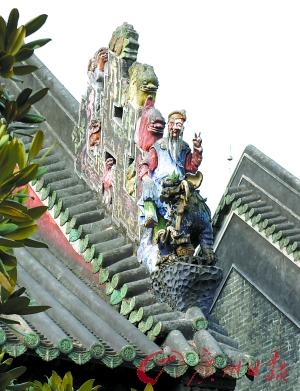
Mr. God of Sun flashes a victory sign.
Traditional patterns like Cranes and Pines Representing Longevity and Peony and Rooster Symbolizing Honor and Wealth flank the sides.
Corridor courtyard sculptures often depict historical stories, auspicious animals, and flowers.
Unlike pre-fabricated pottery sculptures, the on-site creation of grey sculptures allowed artisans greater creative freedom, resulting in unique variations of the same themes across different locations.
The Chen Clan Ancestral Hall represents the pinnacle of Lingnan architectural decoration, showcasing exquisite stone, wood, and brick carvings alongside pottery and grey sculptures. As the largest and most completely preserved ancestral temple building in Guangdong, it serves not only as physical evidence of Qing Dynasty clan systems but also demonstrates the artistic heights achieved by folk crafts in the late Qing.
Related articles
-
 The Hakka: Nomads of Wisdom, Builders of Tomorrow
More
-
Cantonese Opera: Where Tradition Whispers through Neon Lights
More
-
Dim Sum Culture: Where Steamed Baskets Brew Stories
More
-
The Soul of Shaoguan: Where Mountains Whisper Tales of Lingnan
More
-
Chaoshan Culture: a Symphony of Heritage, Flavor and Global Resonance
More
-
Guangdong Lion Dance: a Dance of Myth, Muscle and Community Spirit
More