How Digitization Balances Cultural Heritage Preservation and Future Transformation
To understand the Silk Road is to recognize that it was never a single, linear path, but rather a intricate, beautiful web of connections. It served as a vibrant crossroads where the material culture of one society became the inspiration for another. Chinese silk draped the shoulders of Roman nobility; Indian spices seasoned Persian feasts; and Roman glassware found its way into the homes of Chinese aristocrats.
However, the exchange was never merely transactional. Agshin Aliyev, an Azerbaijani sinologist, notes that while trade was the initial draw, the true discovery was the cultural depth. "We say Silk Road, the first thought is trade... But to China, I discovered that the Silk Road is also a cultural road."
Nowhere is this synthesis more evident than in Azerbaijan, a nation perched at the crossroads of Europe and Asia. The ancient city of Baku, with its UNESCO-protected Old City (Icherisheher), stands as a physical manifestation of this blend—where medieval structures like the Maiden Tower sit comfortably alongside modern architectural marvels like the Flame Towers.
If the Silk Road was the highway, preservation is the foundation upon which the journey continues. Rooted in the Chinese philosophical concept of "Shou Zheng" (守正)—guarding the correct path—the act of safeguarding heritage is not about freezing time, but about securing a foundation for future growth.
Mogao Caves in Dunhuang, this UNESCO World Heritage Site is a sanctuary of Buddhist murals and manuscripts, meticulously preserved across centuries. For Aliyev, Dunhuang is "a living museum of the Silk Road." He argues that its walls tell the story of a thousand years of cultural exchange, and its preservation ensures that this story continues to inspire future generations.
Similarly, in Azerbaijan, the preservation of landmarks like the Maiden Tower (Giz Galasy) in Baku serves as a cornerstone of national identity. Aliyev views this structure not merely as stone and mortar, but as a symbol of resilience. "The Maiden Tower is more than just a historical landmark; it is a symbol of our national pride," he explains.
While preservation secures the past, innovation ensures the future. The concept of "Chuang Xin" (创新)—innovation—is vital to ensuring that cultural heritage does not become a relic confined to a museum, but a living, breathing part of contemporary life.
A striking example of this synergy is the digitization of cultural heritage. “Digital tools have revolutionized research,” Aliyev says. “If you go to a museum, you likely cannot see all the artifacts. But if they are digitized, we can more clearly enjoy and study them from multiple angles.”
He emphasizes the power of this technology to transcend physical limitations: "Digitization can make Dunhuang accessible to people all over the world." This innovation ensures that the heritage is not just preserved, but actively inspires a global audience.
Azerbaijan, too, is navigating the path of heritage preservation, though its approach manifests differently. Preservation in Azerbaijan takes the form of institutional protection and academic study. Aliyev highlights the role of the Heydar Aliyev Foundation, which "invests its energy in protecting Azerbaijan's historical monuments." Furthermore, scholars like himself contribute by passing down knowledge: "From a scholar's perspective, we also protect this building through our research, transmitting it to the younger generation of Azerbaijanis, encouraging them to learn and protect it."
Beyond physical restoration, the Maiden Tower has become a powerful symbol carried in the hearts of the people. Aliyev shares a poignant example of this cultural preservation: "If an Azerbaijani goes abroad to start a business, for instance, to open a restaurant or a company, they will almost certainly name it 'Maiden Tower'." This act of naming, seen even in places like Beijing's "Maiden Tower Azerbaijani Restaurant," is a profound form of intangible cultural preservation. "This is also a form of protection, a form of inheritance," he concludes.
Ultimately, the Silk Road spirit lives in the minds of people, not in ledgers. While the Belt and Road Initiative (BRI) is often quantified by trade volumes, its cultural core—the "mutual" exchange—remains the critical engine for a shared future. This exchange is not merely about language; it is about the collision and fusion of thought patterns.
This "mutual" exchange is, in itself, a radical act of innovation. A prime example is the China-Azerbaijan Classic Works Mutual Translation Project, which was recently solidified by the signing of publishing rights for Chinese classics like Family and Laozi. As Aliyev explains, translating culture-loaded words like "Ren" (Benevolence) requires a radical act of innovation. Translators are forced to deeply understand the source culture and then rebuild it in the target language. It is precisely in this space of "re-creation" that the Silk Road spirit generates entirely new cultural expressions.
This spirit of "inheritance through innovation" extends beyond books into the digital classroom. To meet the surging "Chinese fever" in Azerbaijan, initiatives like the distance-learning Chinese courses have pivoted to a fully digital model. By 2025, these programs had already trained over 500 students, proving that education can be both traditional in content and cutting-edge in delivery. As Aliyev wisely notes, just as Chinese characters evolved to survive digital screens, we must keep the roots of culture alive by presenting them in forms that resonate with younger generations. This is the true essence of the Silk Road in the 21st century: an ongoing cycle of learning, re-creating, and connecting.
As we navigate the complexities of the 21st century, the lessons of the Silk Road are more pertinent than ever. The dialectic of preservation and innovation is not a binary choice; it is a continuous dance.
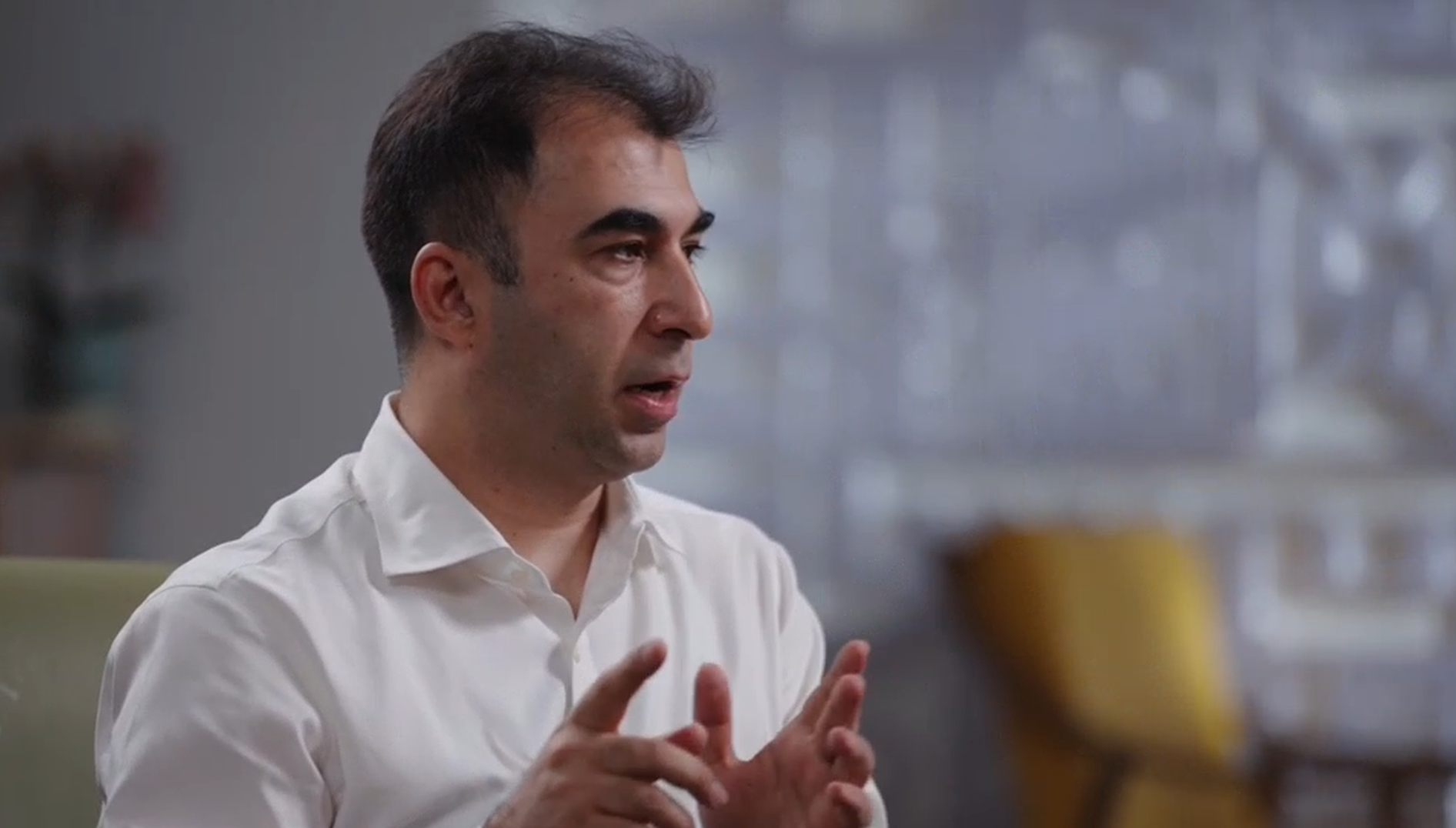
Guest Profile: Agshin Aliyev
Agshin Aliyev is a distinguished Azerbaijani sinologist, translator, and academic. He currently serves as the Head of the Azerbaijani Language Department at the School of Asian Studies, Beijing Foreign Studies University. He is also the Director of the China Research Center at Khazar University in Azerbaijan.