A Thousand Li of Rivers and Mountains
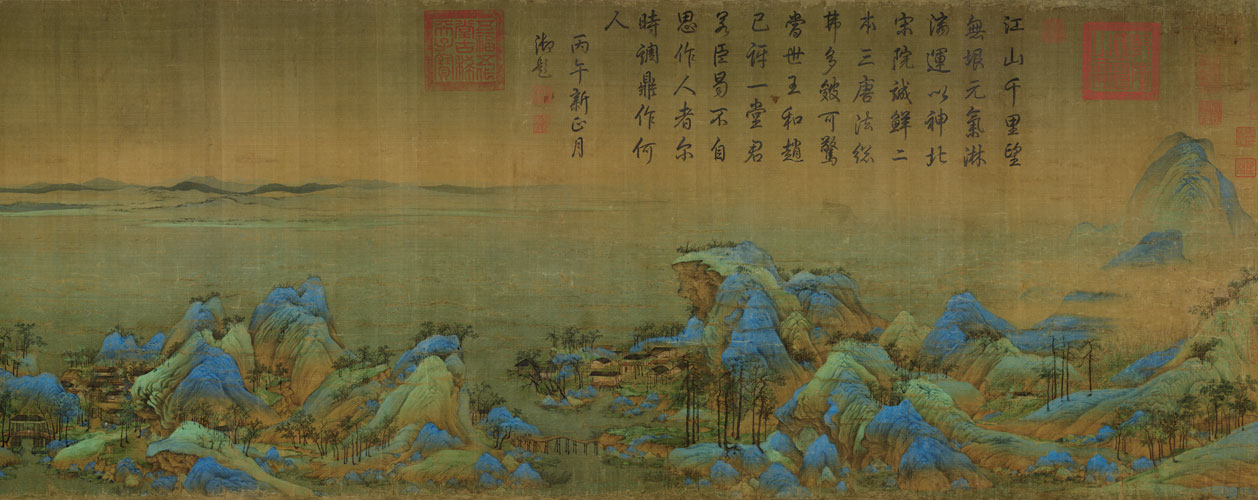
In the history of Chinese painting, "A Thousand Li of Rivers and Mountains" by the Northern Song dynasty artist Wang Ximeng is regarded as the pinnacle of blue-green landscape painting. Completed in 1113 AD, this nearly twelve-meter-long handscroll continues to awe viewers nine centuries later with its grand composition, vibrant colors, and exquisite technique.
The painting measures approximately 12 meters in length and 0.5 meters in height, executed on silk using traditional Chinese coloring methods. It depicts rolling mountains and vast waterways, interspersed with villages, bridges, fishing boats, and travelers—presenting an idealized vision of harmonious coexistence between humanity and nature.
The most striking feature of this work is its intense and enduring blue-green palette. Wang Ximeng used precious mineral pigments, including azurite and malachite, which remain remarkably vivid after a thousand years. The blues symbolize the sky and distant horizons, the greens represent the earth and vitality, with golden accents throughout, collectively creating a majestic yet serene atmosphere.
"A Thousand Li of Rivers and Mountains" is more than a landscape painting; it embodies traditional Chinese philosophical ideals. It integrates the Confucian concept of harmony between humans and nature, Daoist reverence for the natural world, and Buddhist cosmology. The harmonious interaction between people and their environment in the painting reflects the core Chinese values of balance and unity.
Today, the painting is housed in the Palace Museum in Beijing and is rarely exhibited due to its fragility. In 2017, when the museum held a special exhibition for this masterpiece, visitors waited for hours to catch a glimpse of this once-in-a-millennium artwork.