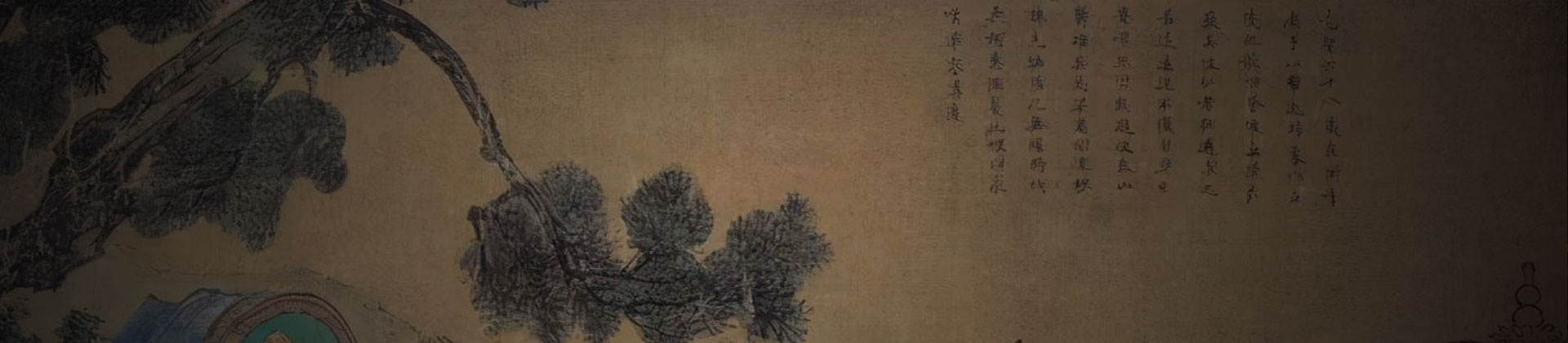
Xu Beihong’s “Galloping Horses”
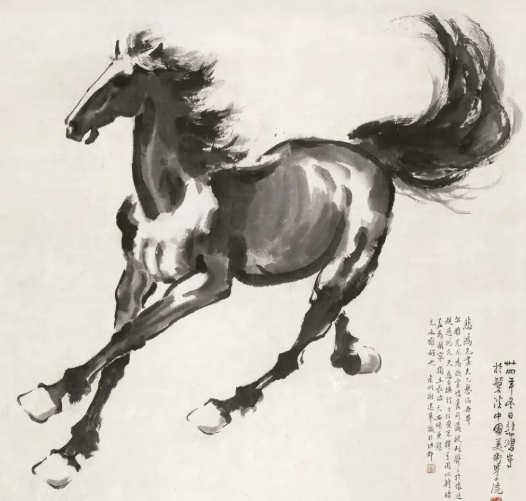
In the 20th century, Chinese art underwent a profound transformation under the influence of Western culture. The painter Xu Beihong (1895-1953) was a pivotal figure in this change. Having studied oil painting and drawing in Europe, he masterfully combined Western realism with traditional Chinese ink techniques to create a revolutionary new style. His horses, in particular, became an enduring symbol of modern China's spirit.
Xu Beihong’s Galloping Horses are radically different from the ones we’ve seen before. These are not resting steeds or imperial chargers, but wild horses running with untamed energy across the plain. They rear their heads, manes flying, with all four hooves off the ground, bursting with dynamic movement and life. Xu’s technique is a brilliant fusion. He uses bold, powerful ink lines to define the form, a skill from Chinese tradition. At the same time, he masterfully controls the wetness of the ink on absorbent paper to render the muscles’ structure and even a sense of light and shadow—a direct result of his Western academic training.
The significance of these paintings, however, goes far beyond technique. Xu painted most of his famous galloping horses during the dark days of the Second Sino-Japanese War (1937-1945). For a nation suffering great hardship, these powerful, charging horses became a potent symbol of China itself—unyielding, striving forward, and desperately longing for freedom and rejuvenation. They were a powerful visual outcry that stirred and inspired millions across China. Today, Xu Beihong’s horses remain some of the most powerful and inspiring images in Chinese art, representing not just an animal, but the unbreakable will of a nation.