Archery in Ancient China
As a time-honoured sport, archery was widely used in hunting and for self-defence, and as a major subject in military training and school education, until the Qing Dynasty (1644-1911) when it gradually lost its military significance and became a pure sport.
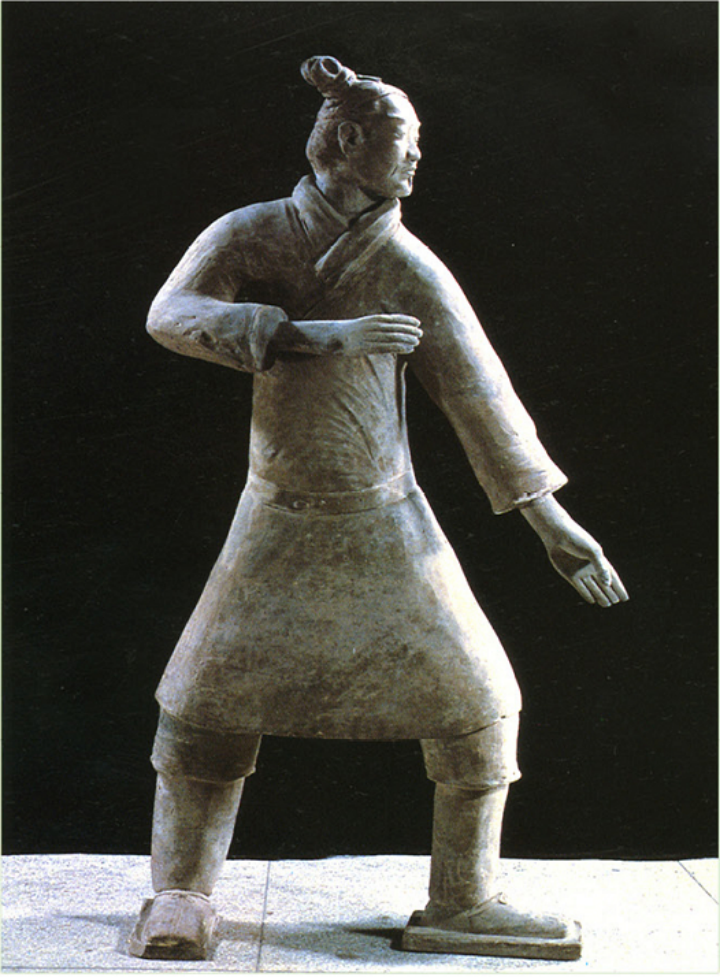
A Grey Pottery Standing Warrior in Shooting Posture
Qin Dynasty (Unearthed at the Pit of Qinshihuang Mausoleum in Lintong County, Shanxi Province, 1974)

Brick Painting of a Horseman Shooting a Goat
Wei to Jin Dynasty (Unearthed from the Wei Jin Tomb NO.5 at Xincheng in Jiayuguan, Gansu Province, 1972—1973)

Sliver High-footed Cup Decorated with Lotus-petal Design and Hunting Scenes
Tang Dynasty (Collection of Freer Gallery of Art, Washington, U.S.A.)

Glazed pottery depicting an archer on horseback, unearthed in 1971 in Qianxian County, Shanxi Province and dating back to the Tang Dynasty (618-907).

Emperor Qianlong (reigned 1736-1796) engaged in archery.
Portions of this article were adapted from research materials originally published on China Sports Museum.