Wu Qin Xi: The Living Heritage of Chinese Wellness
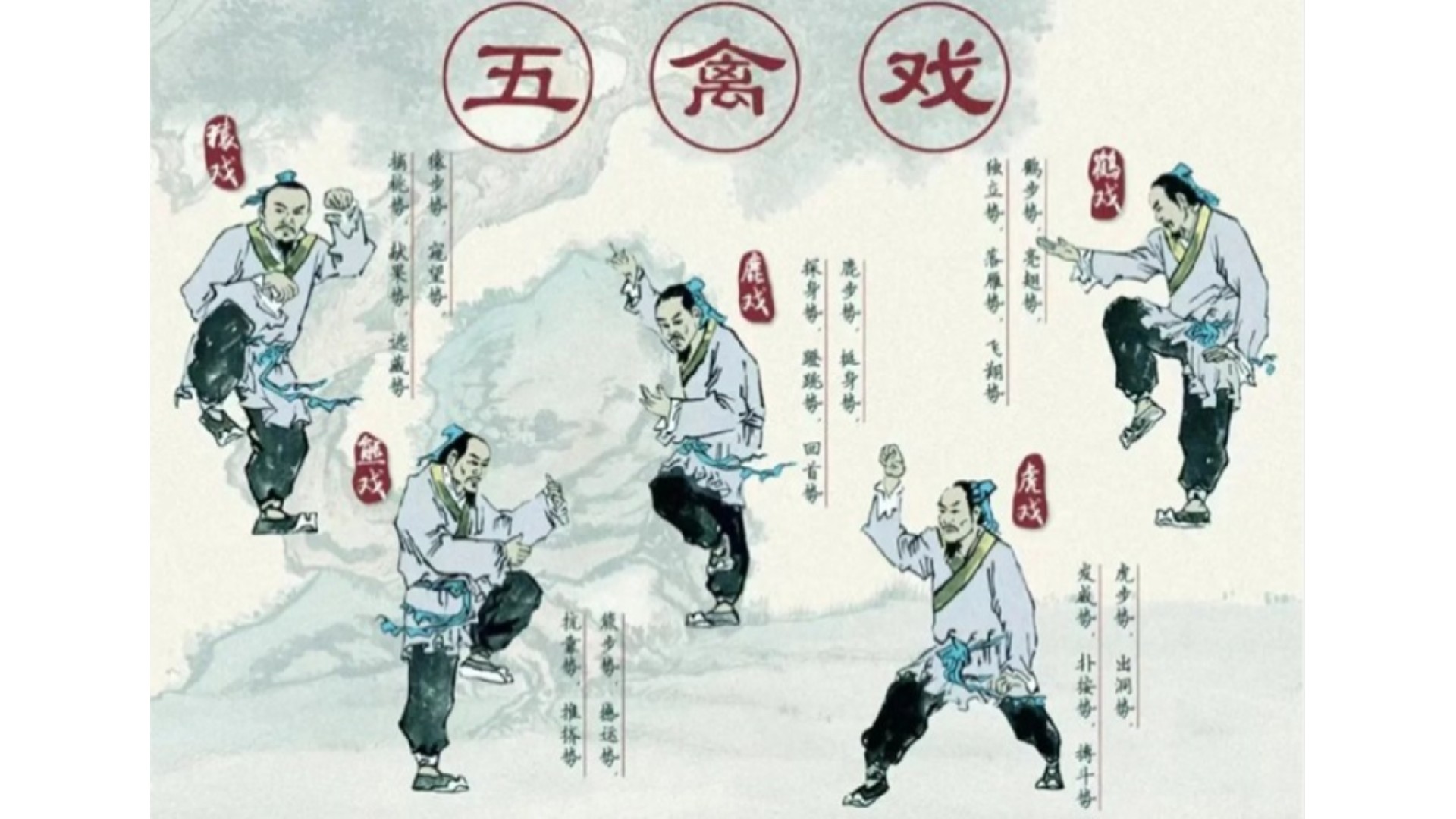
Emerging from the golden age of Chinese medicine, Wu Qin Xi (the Five-Animal Exercises) stand as a quintessential practice of traditional Chinese wellness, blending physical movement with profound therapeutic wisdom. Originated by the renowned physician Hua Tuo during the Eastern Han Dynasty (circa 2nd century AD), it embodies the fundamental Chinese philosophy of harmonizing humanity with nature while incorporating observations from animal behavior and meridian theory. This living tradition represents the perfect balance between dynamic motion and meditative stillness, external exercise and internal cultivation.
The practice’s distinctive features include the fluid imitation of five creatures—the tiger’s power, deer’s grace, bear’s stability, monkey’s agility, and bird’s lightness. Each animal form corresponds to specific organs and meridians: the tiger gesture strengthens lungs through expansive chest openings, while the deer posture benefits kidneys through waist rotations. The strategic combination of movement, breath regulation, and mental focus follows ancient principles of qi circulation, with each sequence designed to enhance vitality while preventing disease. These exercises embody the Chinese medical wisdom that superior doctors prevent illness, making wellness accessible through mindful movement.
More than mere calisthenics, the Five-Animal Exercises represent a living embodiment of China’s preventive healthcare philosophy. They serve as a testament to China’s enduring contribution to global wellness culture, inviting practitioners worldwide to experience a moving meditation where every animal posture echoes ancient wisdom and every breath celebrates the harmony between humanity and the natural world.