Painted Beams: The Colorful World of Traditional Chinese Architectural Art
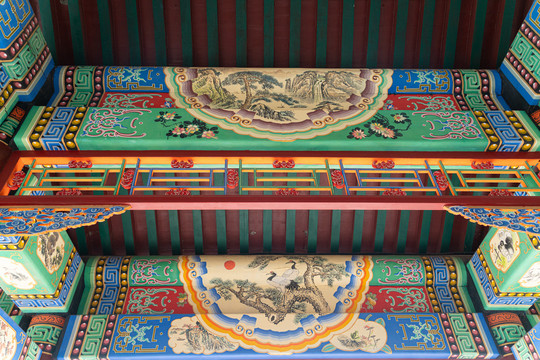
Walk into an ancient Chinese temple or nobleman’s home, and you might notice vibrant paintings stretching across wooden beams and columns—this is Liangzhu Caihua (梁柱彩画), a centuries-old decorative art that turns architecture into storytelling. Unlike plain European cathedrals, traditional Chinese buildings often wear their history and beliefs in bold colors.
These paintings blend intricate patterns (like swirling clouds symbolizing luck) with scenes from mythology (dragons chasing pearls) or daily life (scholars admiring plum blossoms). Think of them as the "murals" of the East—analogous to Italy’s Sistine Chapel ceiling but painted directly on structural timbers. For example, the Forbidden City’s golden dragons on red pillars weren’t just ornamental; they represented imperial power, much like how royal coats of arms adorned medieval European castles.
The techniques are equally fascinating. Artisans used natural pigments and layered gold leaf to create depth, akin to how Renaissance painters mixed tempera and oil. Over time, regional styles emerged: Beijing’s grand paintings resemble baroque opulence, while southern China’s simpler designs echo watercolor landscapes.
Next time you see a Chinese building with vivid beams, remember—you’re not just looking at decoration, but a living canvas where art, symbolism, and craftsmanship merge. It’s a visual language waiting to be deciphered, much like calligraphy or opera.