Plaster Sculpture: Frozen Reliefs on Guangdong Eaves
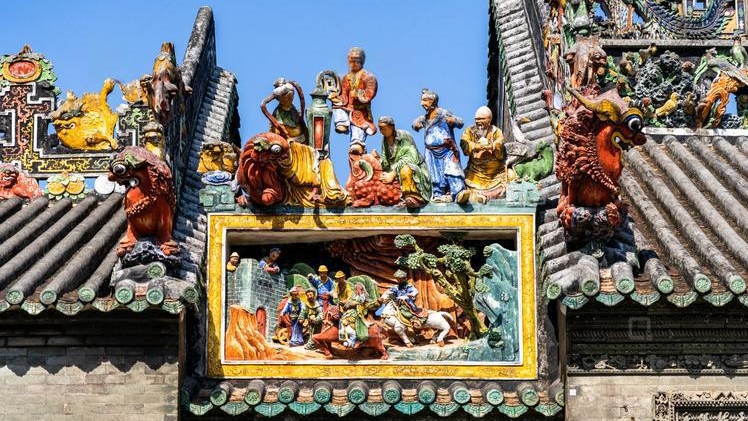
In Guangdong’s traditional architecture, decoration does more than beautify a building—it tells stories. One of the most distinctive examples is plaster sculpture (灰塑), a folk architectural art made from lime, straw, and other materials, shaped by hand into vivid reliefs on roofs, gables, doors, and walls. Found widely in ancestral halls, temples, gardens, and old residences, plaster sculpture turns architecture into a stage for history, legend, and local belief.
If frescoes are paintings on walls, plaster sculpture is painting in relief. Artisans mold scenes of dragons and phoenixes, flowers and birds, opera tales, and auspicious symbols into the surface of a building. In places such as Foshan, Panyu, and other parts of the Pearl River Delta, these works are especially rich and elaborate. A single roof ridge may feature an entire miniature world, packed with movement, color, and symbolism.
Plaster sculpture is admired not only for its beauty, but also for what it represents. Many motifs express blessings for prosperity, harmony, success, and protection. Much like stained glass in European churches or carved stone on Gothic buildings, plaster sculpture combines decoration with cultural meaning. It reflects the Lingnan region’s openness, craftsmanship, and love of lively visual expression.
Next time you visit an old building in Guangdong, look up at the eaves and rooflines. The figures and patterns there are more than ornaments—they are sculptures shaped by hand, memory, and local imagination. In every curve of grey sculpture, the spirit of Lingnan architecture quietly comes alive.