
Qilou: Arcaded Streets Shaped by Climate and Commerce
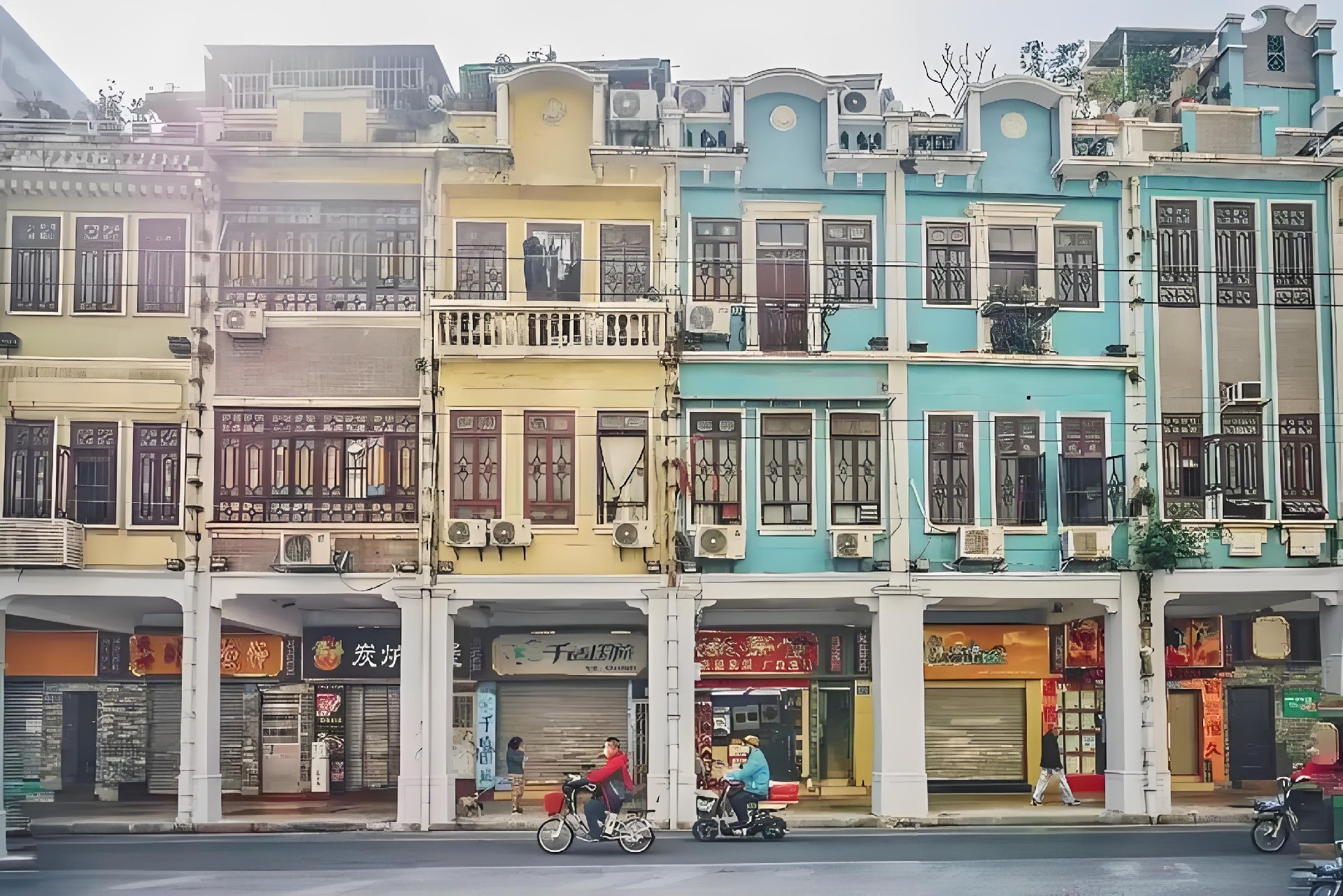
Qilou(骑楼) is one of the most distinctive architectural forms in southern China, especially in historic districts of cities such as Guangzhou, Haikou, and Xiamen. At first glance, its design is easy to recognize: the upper floors project outward over the street, while the ground floor is recessed, creating a continuous covered arcade for pedestrians. This feature developed in response to local climate, giving people shade from intense sun and shelter from heavy rain.
Yet the Qilou is not only a practical response to weather. It also reflects the commercial life of southern Chinese cities. Shops and businesses usually open directly onto the street, while the sheltered walkway encourages people to stroll, browse, pause, and gather. Instead of separating buildings from public life, the Qilou creates an in-between space where trade, movement, and social interaction naturally meet. In this sense, it is both architecture and urban stage.
The visual character of Qilou streets is equally memorable. Repeating columns, shaded corridors, and closely linked facades give the street a strong rhythm and sense of continuity. In some places, these buildings also show traces of cultural exchange, blending Chinese urban traditions with outside influences in decorative details and proportions. More than a row of old buildings, the Qilou reveals how architecture can adapt to environment, support commerce, and shape the everyday experience of a city.