Cursive Script (Caoshu): The Free Expression
Artistic Features of Caoshu
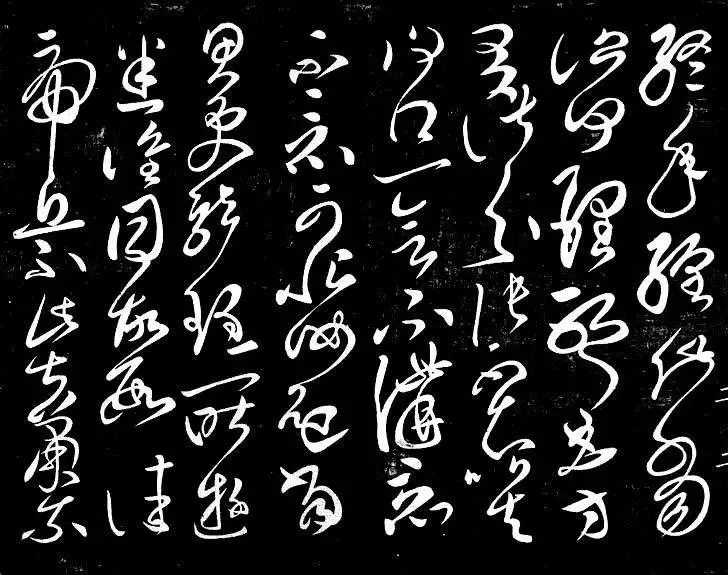
Cursive script, or “caoshu,” is the most liberated form in Chinese calligraphy, often compared to abstract expressionism in Western art for its emphasis on raw emotion. Unlike the structured running script (xingshu), caoshu abandons strict character proportions, with strokes merging into bold, sweeping lines that resemble Jackson Pollock’s drip paintings. Calligraphers prioritize emotional release over legibility; a single character might be reduced to a few energetic strokes, capturing joy, anger, or tranquility in a way similar to how a jazz musician improvises a solo.
Development of Caoshu
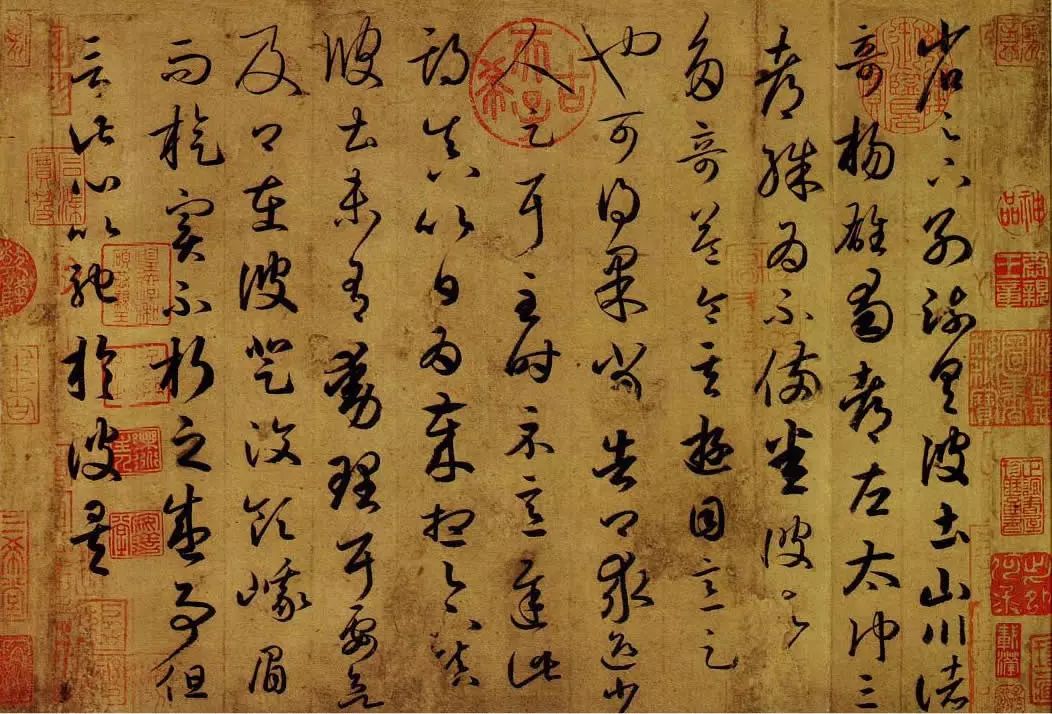
Caoshu emerged during the Qin Dynasty (221–206 BC) as a faster alternative for official documents, much like how shorthand developed in 19th-century Europe for court reporting. It flourished in the Han Dynasty (206 BC–220 AD) when scholars like Zhang Zhi refined its techniques, and reached new heights in the Tang Dynasty (618–907 AD) with a shift toward artistic expression. Over time, it split into “zhangcao” (formal cursive) and “jincao” (modern cursive), the latter being more fluid and abstract, akin to the evolution from classical to contemporary dance.
Representative Calligraphers
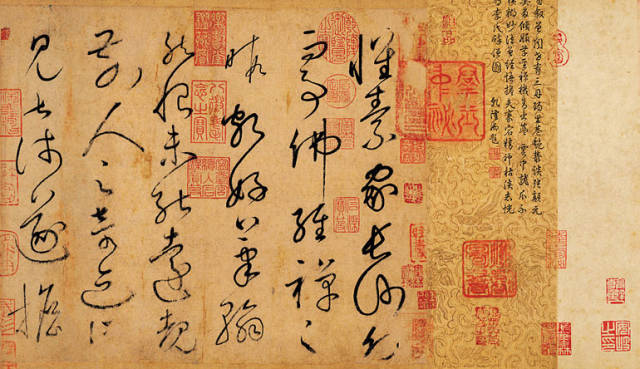
Zhang Zhi, known as the “Sage of Cursive Script,” revolutionized caoshu with his dynamic style, inspiring later masters like Wang Xizhi. However, it was 怀素 (Huai Su) in the Tang Dynasty who pushed boundaries further—his Autobiography in Cursive Script is a whirlwind of ink, with characters overlapping and swirling like a storm, comparable to Vincent van Gogh’s Starry Night in its intensity. These artists elevated caoshu from a practical tool to a powerful form of self-expression, influencing modern artists who blend it with graffiti and digital art today.