Tools of the Calligrapher’s Craft: the “Four Treasures of Study”
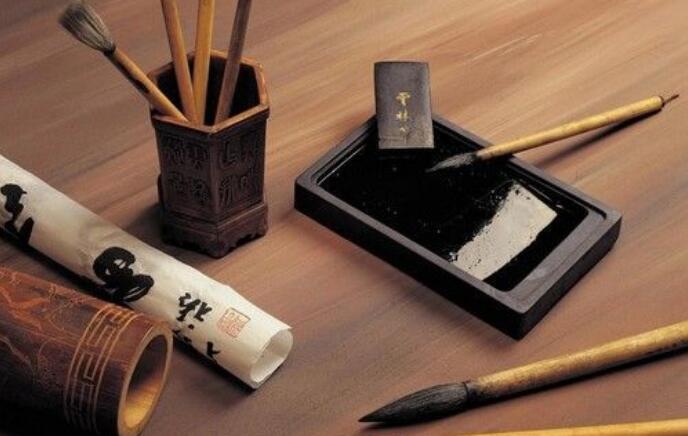
An Overview of the “Four Treasures of Study”
In Chinese calligraphy, the “Four Treasures of Study”—brush (bi), ink (mo), paper (zhi), and inkstone (yan)—are more than just tools; they are integral to the art’s soul, much like how a painter’s oils and canvas shape their work. Unlike Western writing tools (pens, pencils) designed for efficiency, these treasures are crafted for expression: a good brush bends without breaking, high-quality ink flows smoothly, paper absorbs ink evenly, and an inkstone grinds ink to the perfect consistency. Together, they create a harmonious system that has supported calligraphy for over 2,000 years.
Characteristics of Each Treasure
Brush: Typically made with animal hair (wolf, goat, or rabbit) tied to a bamboo handle. Goat-hair brushes are soft, ideal for delicate strokes (like watercolor brushes), while wolf-hair brushes are stiffer, perfect for bold lines. The brush’s tip—rounded and flexible—lets calligraphers control stroke thickness, from thin “silk threads” to thick “iron rods.”
Ink: Traditionally made from pine soot mixed with glue, formed into ink sticks. It comes in black or subtle hues (brown, blue-gray), with higher-quality ink drying with a glossy sheen, similar to how oil paints develop depth over time.
Paper: Rice paper (xuanzhi) is the most prized—it’s thin yet strong, absorbing ink slowly to create “ink gradations” (light to dark), much like watercolor paper’s texture affects pigment spread.
Inkstone: Carved from stone (often Duan stone from Guangdong), it has a smooth grinding surface. Calligraphers add water to the stone and rub the ink stick in circles to make liquid ink, a ritual that calms the mind before creating art.
Their Roles in Shaping Calligraphy
Each treasure influences the final work: a soft brush creates flowing running script (xingshu), while a stiff brush suits bold regular script (kaishu). Ink density changes stroke depth—dilute ink for light, ethereal lines, thick ink for heavy, powerful marks. Rice paper’s absorption prevents smudging, letting calligraphers layer strokes without blur. Even the inkstone matters: a smooth stone grinds fine ink, ensuring no grit disrupts the brush’s movement. Without these treasures, the expressive beauty of calligraphy—its ability to convey emotion through lines—would be lost, just as a musician can’t play a melody without a well-tuned instrument.