Spring Festival Couplets: Calligraphy at the Door of Everyday Life
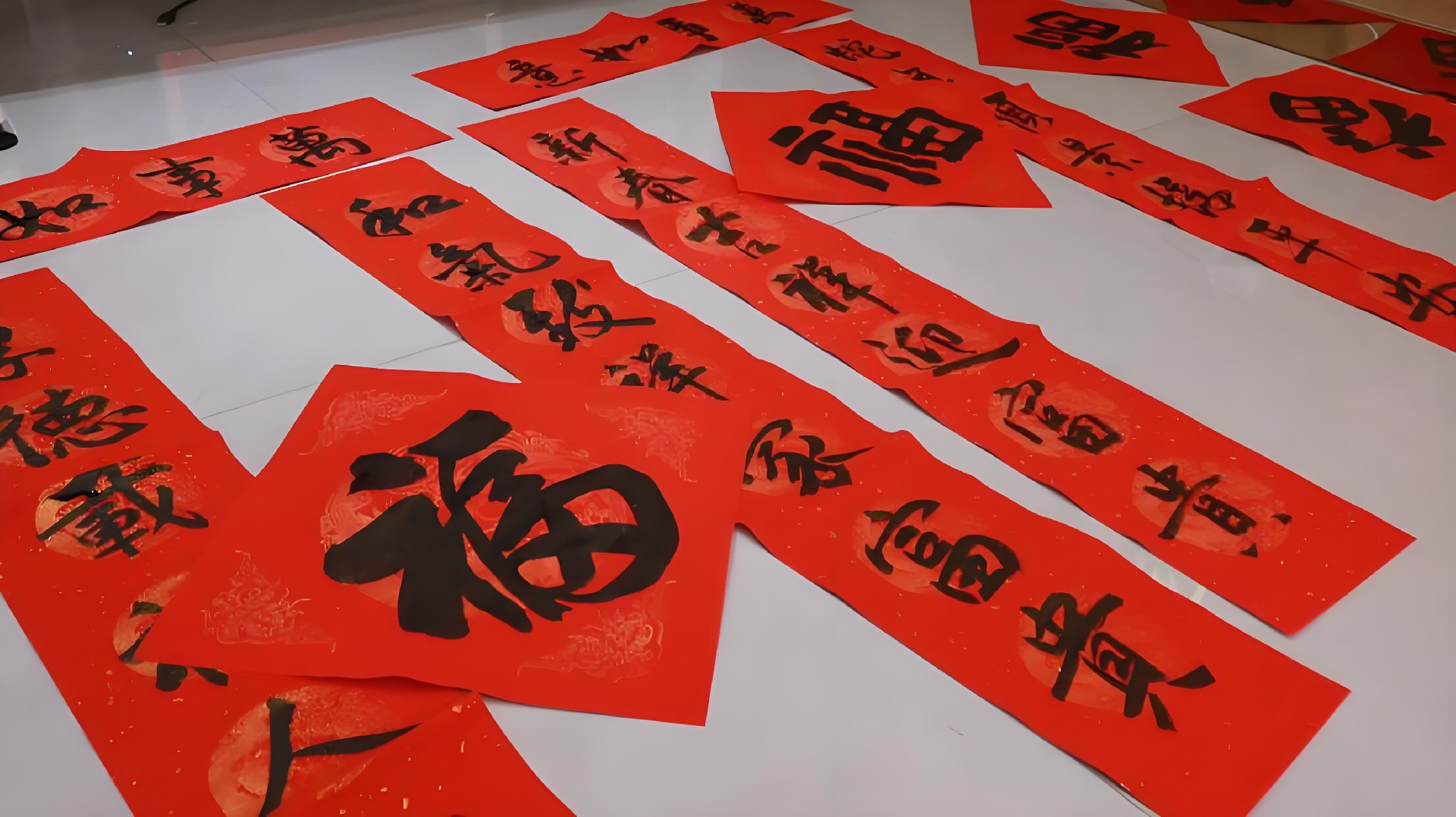
Among all forms of Chinese calligraphy, Spring Festival couplets(春联)may be the most familiar to ordinary people. Written on red paper and placed on both sides of a doorway, they are an essential part of Lunar New Year celebrations. More than decoration, these paired lines of writing bring together language, ritual, and visual beauty, turning the entrance of a home into a small display of hope and culture.
A typical set of Spring Festival couplets includes two vertical lines and often a horizontal inscription above the door. The phrases usually express wishes for prosperity, peace, happiness, a good harvest, or family harmony. In this way, spring couplets are a bit like holiday greetings made permanent for the season—except they are also works of brush-written art. Even when printed versions are common today, handwritten couplets still carry a special warmth and personal touch.
Spring Festival couplets also show how calligraphy lives beyond museums and masterpieces. They bring brushwork into everyday space, where people see it, read it, and live with it. For many families, putting up couplets marks the true beginning of the New Year. It is a simple act, but one filled with ceremony: old words come down, new words go up, and the home steps into another cycle of time.
Seen this way, Spring Festival couplets are not only festive writing, but one of the clearest examples of how Chinese calligraphy remains connected to everyday life. They prove that in China, writing can still bless a doorway, shape a season, and make art part of ordinary experience.