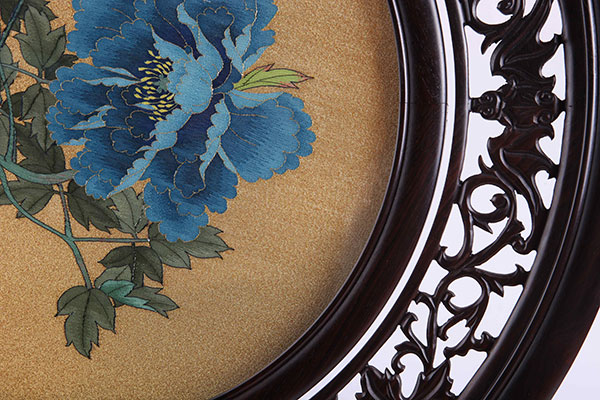
Song Brocade Weaving Technique
Song brocade is an outstanding representative of traditional Chinese silk weaving, named after its origin in Suzhou during the Song Dynasty. As one of China's three most famous brocades, it is renowned for its exquisite craftsmanship and elegant artistic style. This technique originated in the Northern Song Dynasty, matured during the Southern Song, and continued to develop through the Ming and Qing dynasties, becoming an imperial tribute.
Song brocade is made from premium silk threads and woven by hand on traditional wooden looms. Its most distinctive feature is the "color-changing" technique, where artisans create richly layered and harmoniously colored patterns through complex warp and weft interweaving. Based on craftsmanship and function, it can be classified into four main types: heavy brocade, refined brocade, box brocade, and small brocade.
Historically, Song brocade was not only used for clothing but also widely employed in artwork mounting due to its refined aesthetic. The "Paradise Brocade Scroll" from the Qianlong era, now housed in the Palace Museum, represents the pinnacle of Song brocade craftsmanship from Suzhou.
Currently, this traditional craft faces a severe inheritance crisis. Due to the impact of modern production methods, traditional workshops have nearly all ceased operation, with fewer than 20 artisans mastering the complete technique and many original patterns being lost. Protecting and revitalizing this precious intangible cultural heritage is an urgent priority.