Shu Brocade Weaving Technique
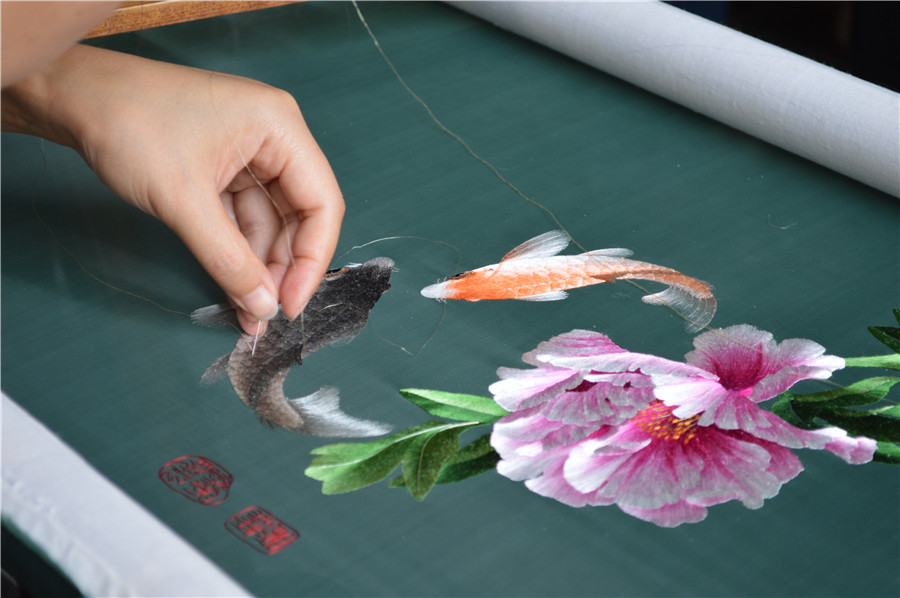
Chengdu, known as the "Land of Abundance", has preserved the handwoven Shu Brocade technique for over 2,000 years. Shu Brocade refers to the colorful woven silk produced in Chengdu, with its earliest records dating back to the Spring and Autumn Period (during the reign of King Huiwen of Qin). It flourished during the Qin-Han and Tang-Song dynasties, declined in the late Ming Dynasty, revived in the mid-Qing Dynasty, but faced renewed challenges in modern times. After the founding of the PRC, Shu Brocade experienced a revival, yet industrialization led to traditional looms being replaced by machines, threatening its survival.
The technique employs a traditional Draw Loom, involving design, patterning, and collaborative weaving—a process sharing principles with modern mechanized production.
As a cultural symbol of Chengdu, the city earned the name "Brocade City", and the nearby Min River is called "Brocade River". Rooted in Sichuan culture, Shu Brocade has distinct regional features. Since the Qin-Han era, it was traded to ethnic regions and the Silk Road, fostering economic growth, cultural exchange, and ethnic unity.
Today, safeguarding this intangible cultural heritage is urgent, requiring immediate action to ensure its continuity.