Mongolian Lele Cart
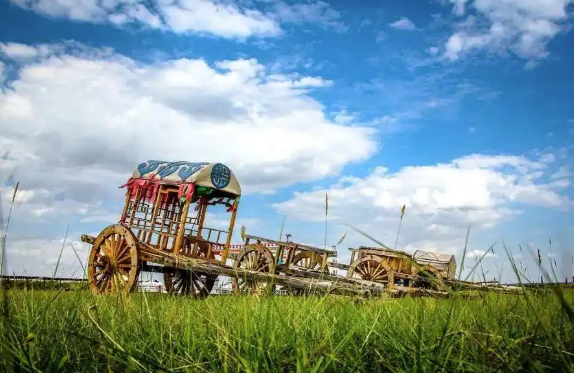
The Mongolian Lele Cart (known locally as Lele Che), also referred to as the Lulu Cart or Ox Cart, is a traditional wooden vehicle designed specifically for the nomadic lifestyle of the Mongolian people. The name Lele mimics the sound herders make to urge their oxen forward. Historically documented as early as the Han Dynasty (206 BCE–220 CE) under the term Yuan Fu, this technology served as the primary mode of transportation on the Eurasian steppe for over two millennia, earning the title The Boat of the Grasslands.
The construction of the Lele Cart is defined by its adaptation to the harsh grassland environment. Characterized by a small body and large double wheels, the entire vehicle is crafted exclusively from native woods such as birch, pine, willow, and elm. A defining technical feature is the complete absence of metal components; no iron nails or fittings are used. All parts are joined using traditional woodworking joinery, making the cart lightweight, easy to manufacture, and simple to repair in remote areas. This all-wood design prevents damage when traversing soft soil, marshes, and dense grass, leading to its nickname Aerobat over the Grass.
Functionally, the Lele Cart served as a mobile home for nomadic families, embodying the principle: "When moving, the cart is the room; when stopped, the felt tent is the house." It was versatile, used for transporting yurts (ger). Beyond civilian use, the cart played a critical military role, serving as a supply wagon to transport army baggage and logistics during wartime.
Today, the traditional use of the Lele Cart as a primary transport vehicle has largely been replaced by modern machinery. However, the craft survives in specific remote pastoral areas of Inner Mongolia, particularly in East and West Ujimqin Banners and Chen Barag Banner. In these locations, a small number of herders still construct and utilize these carts for short-distance tasks like hauling firewood or water during seasonal migrations. Elsewhere, the Lele Cart is primarily preserved as a cultural symbol, featured in Naadam festivals, tourist demonstrations, and museum exhibitions rather than daily logistics.