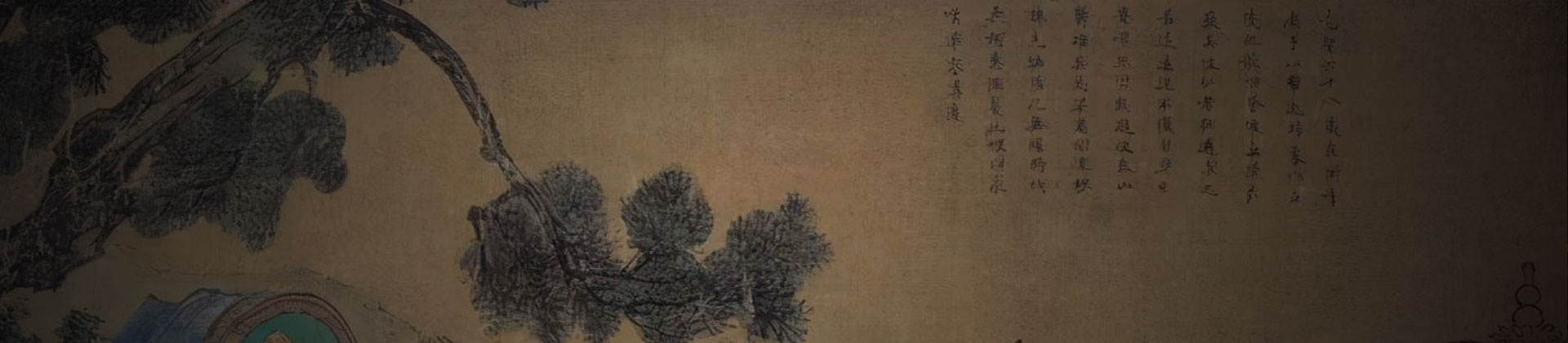
Wen Tong's Ink Bamboo
In the world of Chinese literati painting, bamboo is far more than a simple plant. Rendered in ink, it becomes a supreme symbol of moral character, integrity, and inner emotion. The Northern Song literati painter Wen Tong (1018–1079) was the key figure who elevated ink bamboo to its artistic pinnacle. His works not only defined the techniques of ink bamboo painting but also laid the philosophical foundation of literati painting as a means of expressing emotion through objects.
"Having a Complete Bamboo in Mind": Observation and Abstraction
The core of Wen Tong’s approach to painting bamboo lies in the concept of “having a complete bamboo in mind”. This is not merely a metaphor, but a methodological principle: before putting brush to paper, the painter internalizes the bamboo’s physical form and spatial relationships through prolonged and meticulous observation. As a result, his brushwork is swift and precise, producing a highly refined representation of nature.
Technical Core: Dark Ink for the Front, Light for the Back
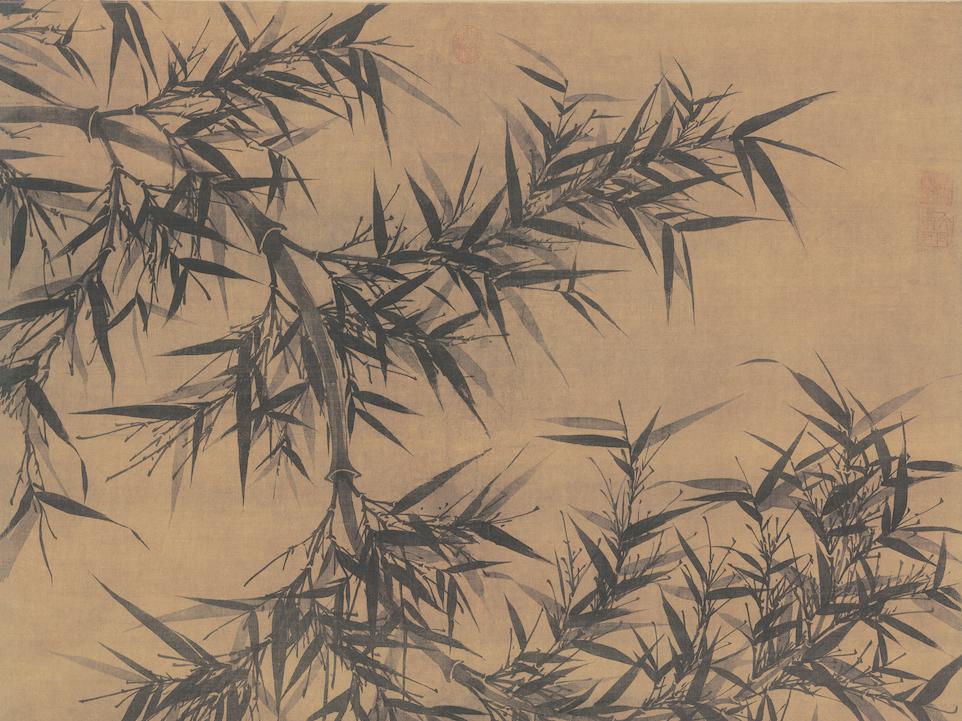
Wen Tong’s most important innovation was technical in nature. He abandoned the traditional method of outlining forms and then filling them with color, creating instead a new formula of using dark ink for the front and light ink for the back. Using only monochrome ink, and through precise control of tonal variation and moisture within a single brushstroke, he was able to convey the three-dimensional sense of bamboo leaves turning in space. This technique addressed the fundamental challenge of depicting volume and depth on a two-dimensional surface, making the expressive power of ink itself the dominant element of the painting.
This technical breakthrough had an immediate impact. It allowed bamboo painting to move beyond reliance on color and become a purely ink-based art form, completed through rhythm, tonal variation and brushwork alone. This marked the formal establishment of “ink bamboo” as an independent subject and style. Wen Tong was therefore revered by later generations as the Master of Ink Bamboo, and his influence extended from Su Shi of the Song Dynasty to Li Kan of the Yuan Dynasty.