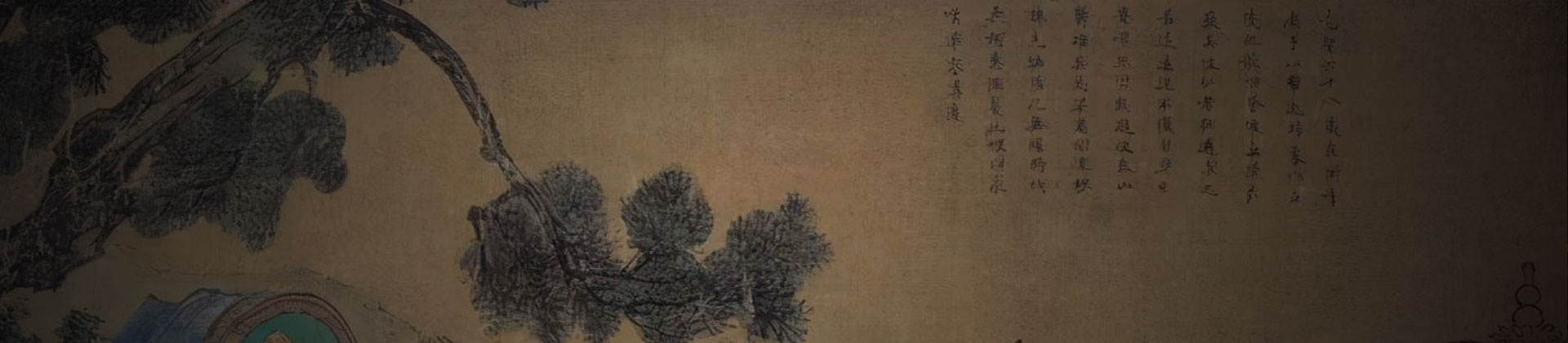
Four-Plum-Blossom Painting

Four-Plum-Blossom Painting is a surviving masterpiece by the Southern Song Dynasty painter Yang Wujiu (1097–1169). It is the first long handscroll in the history of Chinese painting to purely employ ink and wash to depict the complete life cycle of plum blossoms.
Yang Wujiu used a single, continuous line to outline each petal, creating circles that are fluid and lively, exquisitely capturing the subtlety of the plum blossom's four stages: budding, partially open, in full bloom, and withering. The composition is sparse and open. By integrating calligraphic brushstrokes into painting, he achieved rich yet pure gradations of ink, using only its density, dryness, and wetness to create spatial depth and the pristine elegance of the plums.
His art directly influenced many later masters of plum painting, including Zhao Mengjian and Wang Mian. The tradition Yang Wujiu established—using painting as a metaphor for ideals and plum blossoms to express personal sentiment—deeply bonded the plum blossom with the scholar's steadfast and unyielding character. It became one of the most classic and symbolic motifs in Chinese literati painting.