Wei-Jin Xuanxue: Intellectual Discourse, the Seven Sages of the Bamboo Grove, and the Charm of Scholarly Elegance
During China’s Wei-Jin period (220–420 AD), a unique intellectual movement called Xuanxue (玄学, Mysterious Learning) emerged, blending Daoist philosophy with Confucian ideas. Unlike rigid classical studies, Xuanxue emphasized abstract debates on metaphysics—such as the nature of existence and the balance between self and society—often conducted over tea in elegant salons. Think of it as ancient China’s version of Parisian café philosophy, where thinkers challenged conventional norms.
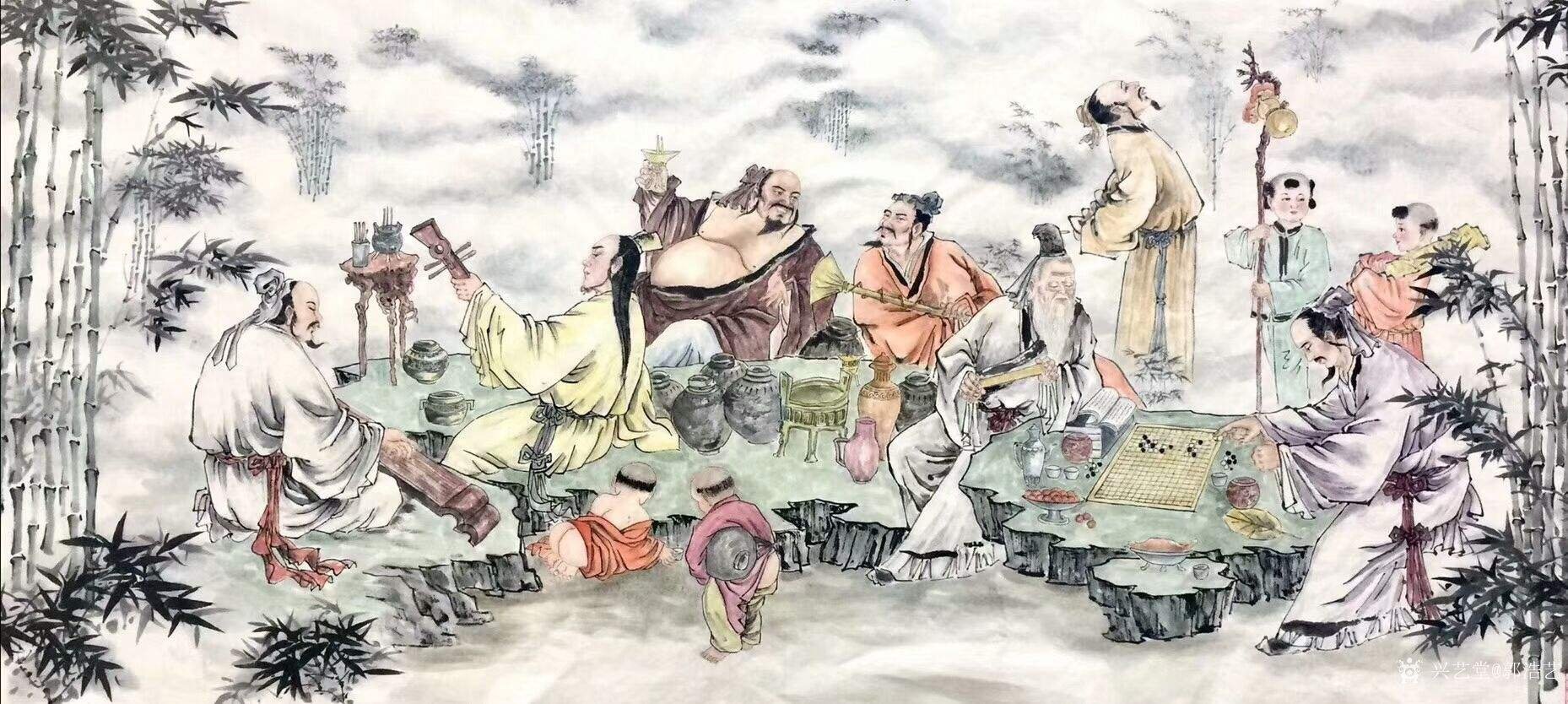
A key symbol of this era was the Seven Sages of the Bamboo Grove, a group of scholars who retreated to a bamboo forest to escape political chaos. They engaged in witty, free-flowing discussions (qingtan, or pure talk) about life, music, and freedom—much like Beat poets gathering in 1950s San Francisco. One sage, Ji Kang, famously played the guqin (a Chinese zither) while composing essays on immortality, blending art with philosophy. Their unconventional lifestyle—drinking wine, rejecting official careers, and valuing personal expression—challenged societal expectations, akin to modern artists who prioritize creativity over conformity.
Xuanxue’s legacy lies in its celebration of individuality and intellectual freedom. Though centuries old, its themes resonate today: the urge to question norms, find meaning beyond material success, and cherish moments of quiet reflection amid a busy world. For those exploring Chinese culture, it’s a window into a time when minds roamed as freely as the bamboo forests surrounding these scholars.