Silver Tiger
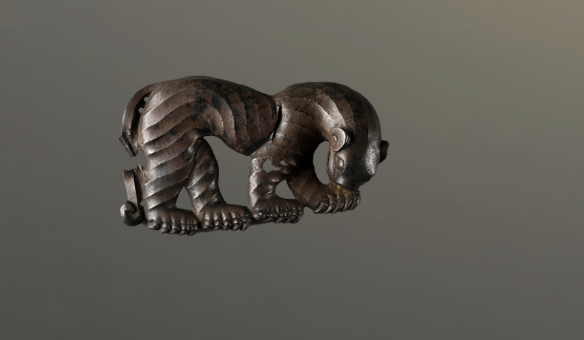
Among the many treasures of the Shaanxi History Museum, a small yet striking silver tiger ornament stands out. It was discovered in 1957 in a Xiongnu tomb at Nalingaotu Village, Shenmu County, Shaanxi Province, and dates from the Warring States to Western Han period, approximately the 5th century BCE to the 1st century CE.
Form and Craftsmanship
The silver tiger measures 11.5 centimeters in length and was cast using relief techniques. The head is independently sculpted in the round, depicting a fierce tiger turning its neck downward and licking its front paw. The body is rendered in shallow relief, decorated with parallel tile-like raised ridges that imitate the texture of tiger fur, with simple yet powerful lines. A circular perforation is set at the neck, and three evenly spaced holes, each 0.3 centimeters in diameter, are distributed along the tail. The surface has been polished, with fine chasing marks preserved in certain areas. After being cast using the lost-wax method, the piece was meticulously finished by hand, reflecting the superb metalworking skills of Xiongnu artisans.
Function and Cultural Significance
The perforations indicate the silver tiger’s practical function: it was likely riveted or stitched onto leather garments, horse gear or tents. Similar forms are also found among Xiongnu bronze chariot fittings and armor components. This integration of decoration and utility is a characteristic feature of nomadic material culture, in which art is closely intertwined with everyday life amid migration and warfare.
For the Xiongnu, the tiger symbolized strength and protection. The curled posture of the silver tiger conveys both the wild vitality of nature and the steppe peoples’ admiration for bravery. Although its form shows influences from decorative motifs of the Central Plains, its concise and abstract lines retain the distinctive spirit of steppe art.