Lotus-and-Crane Square Wine Vessel
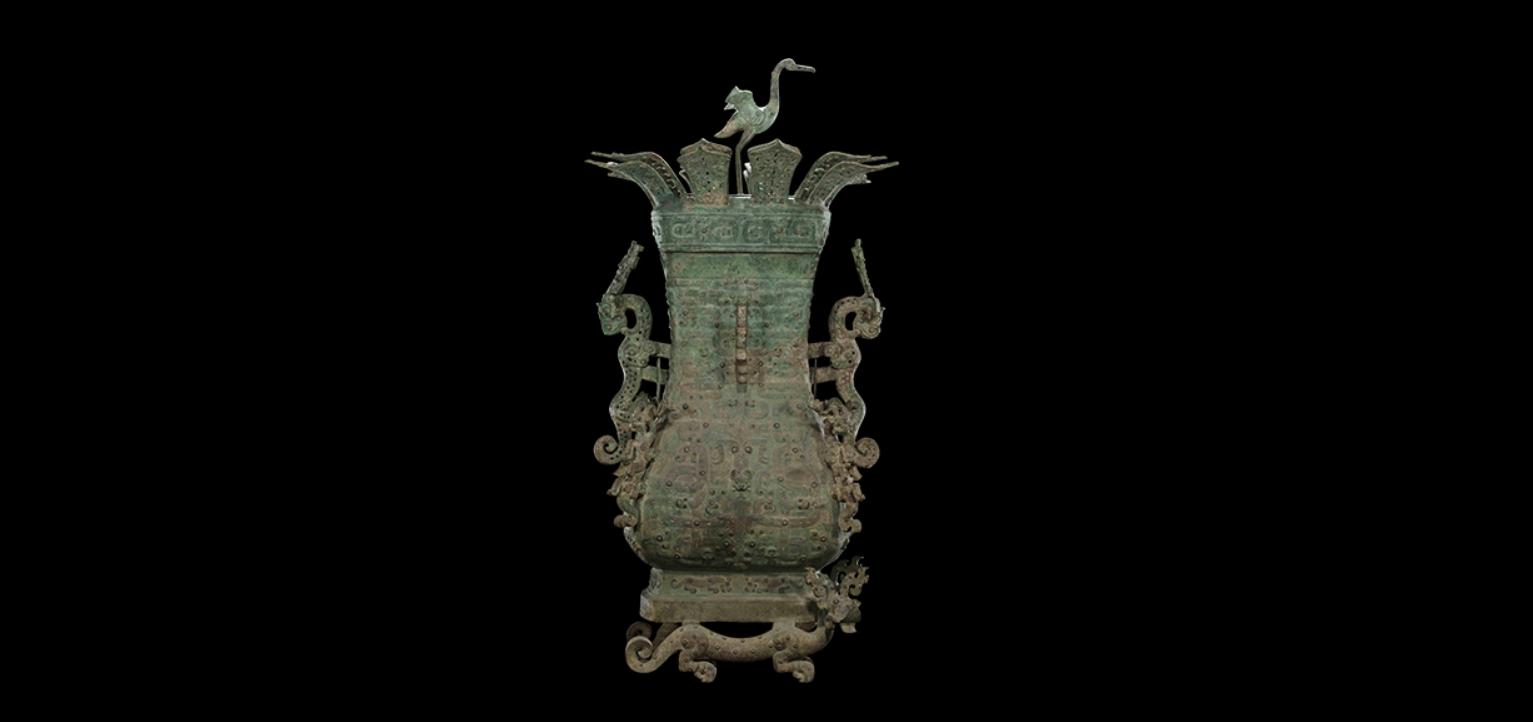
At the Henan Museum in central China, one bronze treasure stands above all others. Discovered in 1923 in the tomb of a Zheng state duke, the Lotus and Crane Square Wine Vessel represents the pinnacle of bronze artistry during China's Spring and Autumn period.
At first glance, it's imposing—over a meter tall and weighing nearly 65 kilograms. The body is decorated with dragons: two form the handles, four crawl up the belly, and two mythical beasts at the base support the weight.
The top has a different design. Two layers of lotus petals open outward, and at the center stands a crane with its neck stretched and wings spread.
The Spring and Autumn period was a time of significant change in Chinese thought. Old traditions broke down while new ideas emerged. The crane, poised to take flight, reflects this shift.
The vessel itself held wine for rituals and banquets. But its size and decoration suggest it was more than practical. It was a symbol of the owner's status.
Today, the Lotus and Crane is recognized as one of China's most important bronzes. In 2003, it appeared on a postage stamp featuring Eastern Zhou dynasty treasures.