Bronze Prohibition Table
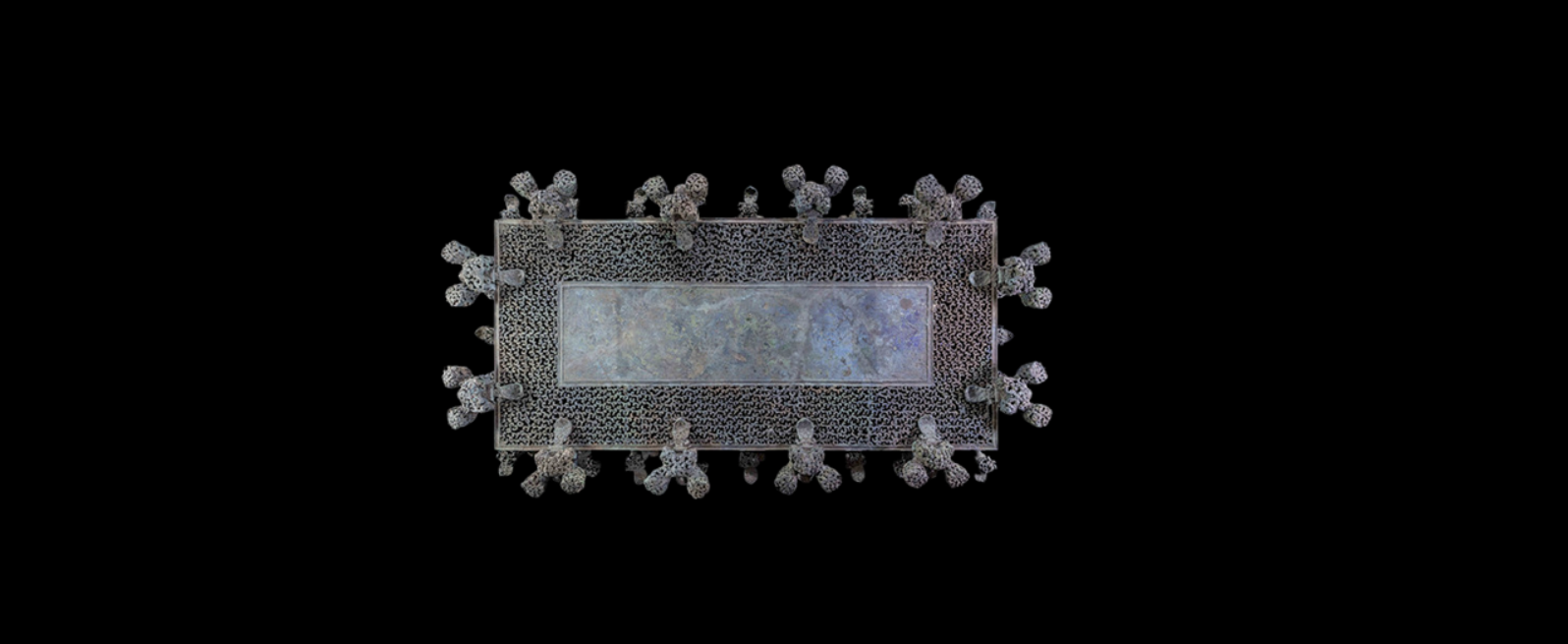
A remarkable bronze object in the Henan Museum tells a cautionary tale from ancient China. Its name—the Bronze Prohibition Table with Cloud Patterns—contains a warning in a single word.
What is a "jin (Prohibition)"? In ancient times, it was a low table used in rituals and banquets to hold wine vessels. But the word also means prohibition. This was deliberate. The Zhou dynasty, having overthrown the Shang, believed the previous rulers had drunk themselves into ruin. So they issued China's first official ban on alcohol, strictly limiting when drinking was allowed. Naming this table a "prohibition" was meant as a constant reminder: know your limits.
But this object is far more than a moral lesson cast in bronze. Twelve dragon-like creatures cling to its sides, tongues hanging out as if straining to reach the wine that would have rested on the surface. Twelve more beasts crouch below as legs, their bodies arched as if bearing great weight. The surface itself is covered in intricate, multi-layered cloud patterns carved in openwork.
The real marvel is how it was made. The table was created using the lost-wax method—a technique that allows for extraordinary detail. Artisans carved a model from beeswax, coated it in clay, then heated it so the wax drained away, leaving a hollow mold. Molten bronze was then poured in, capturing every detail of the original wax. This piece proves Chinese craftsmen had mastered this complex technique by 550 BCE—centuries earlier than once believed.
When excavated in the 1970s, the table was found in hundreds of fragments, seemingly beyond repair. But over nearly three years, a team of conservators painstakingly pieced it back together, inventing techniques as they went. Their work became a legend in its own right.
In 2002, the Prohibition Table was placed on the list of Chinese artifacts banned from overseas exhibition. It is a treasure twice over: created by ancient masters, and restored by modern ones.