Water Sports in Ancient China
In ancient times, swimming and rowing grew out of the needs for fishing and fighting on water and developed, usually in connection with festivals, into sporting activities with a strong national colour, such as the dragon-boat race.
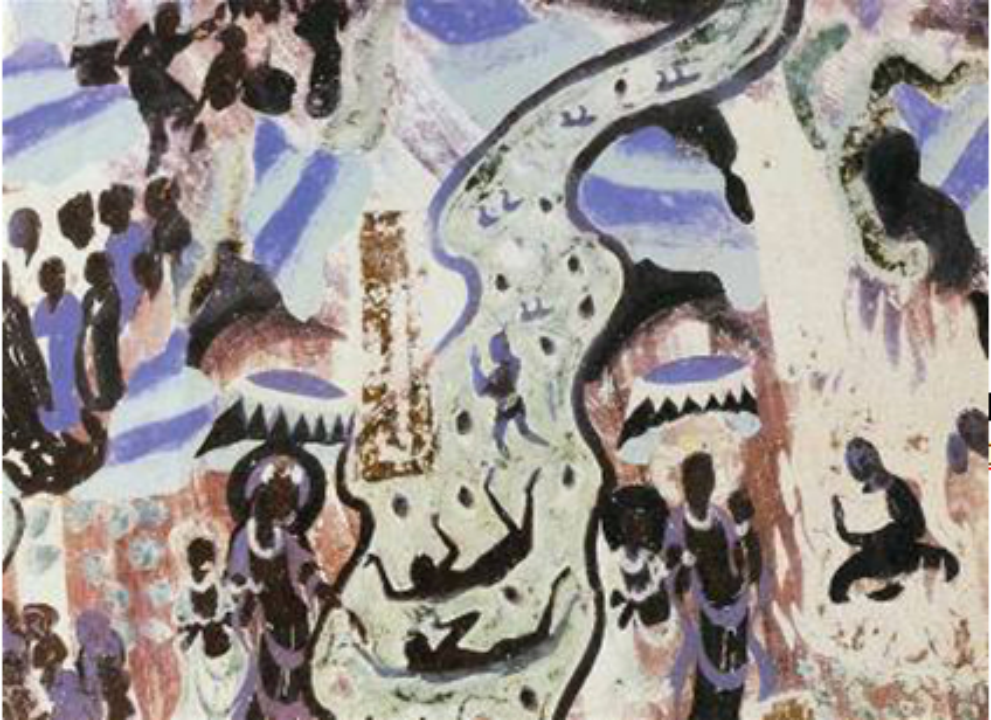
This mural from Cave 420 at the Mogao Grottoes in Dunhuang (Sui Dynasty, 581-618 C) vividly depicts a group of vigorous and athletic swimmers, capturing a dynamic scene of ancient aquatic exercises.

Churning through the waves: A Qing mural in Potala in Lhasa, Tibet Autonomous Region (1644-1911). The picture depicts various postures of swimmers. The characters are lively and vivid with lifelike images.
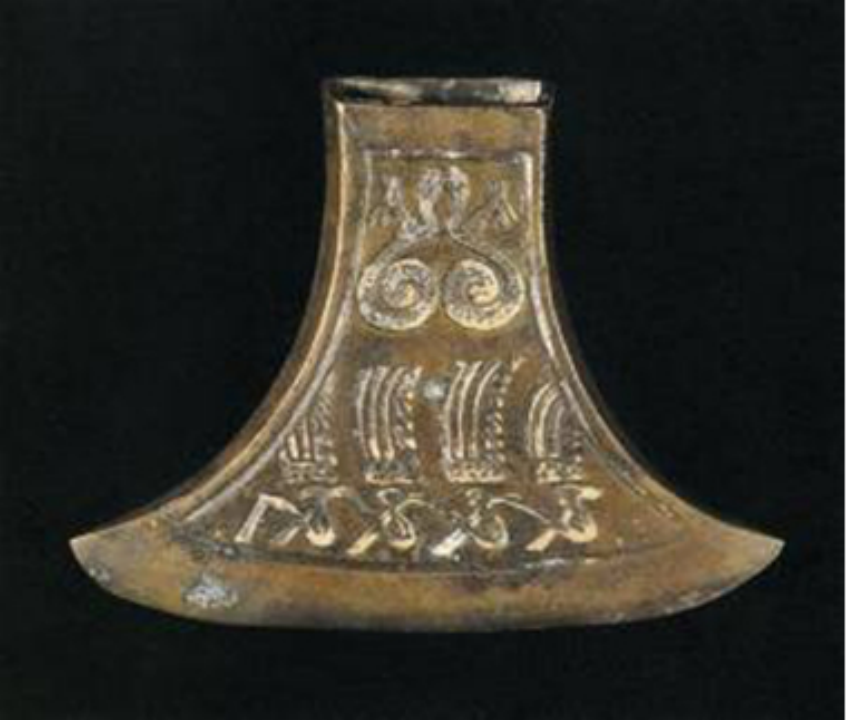
A bronze axe in the Spring and Autumn Period (770-475), excavated in 1976 in Yinxian County, Zhenjiang Province, with the upper part of the design showing a pair of dragons and the lower part some dragon-boat rowers wearing feathered headgear.
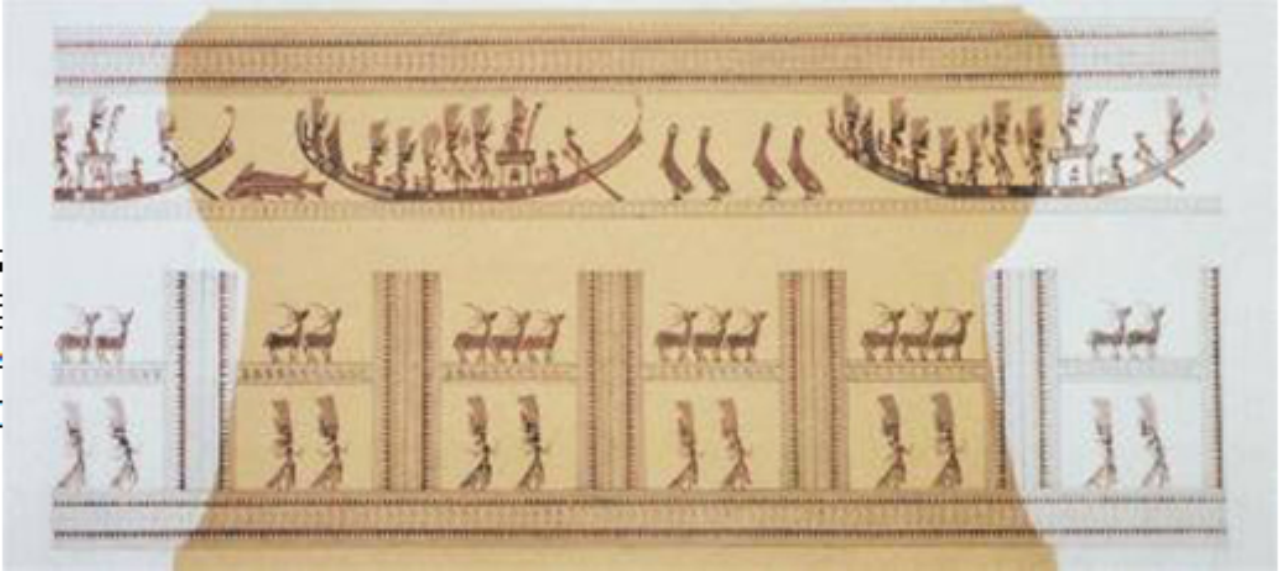
Another Western Han drum with a design of dragon boats, excavated in 1972 in Xilin County, Guangxi Province.
Portions of this article were adapted from research materials originally published on China Sports Museum.