Chinese Music Theory: Pentatonic Scale & Twelve Lǜ Basics
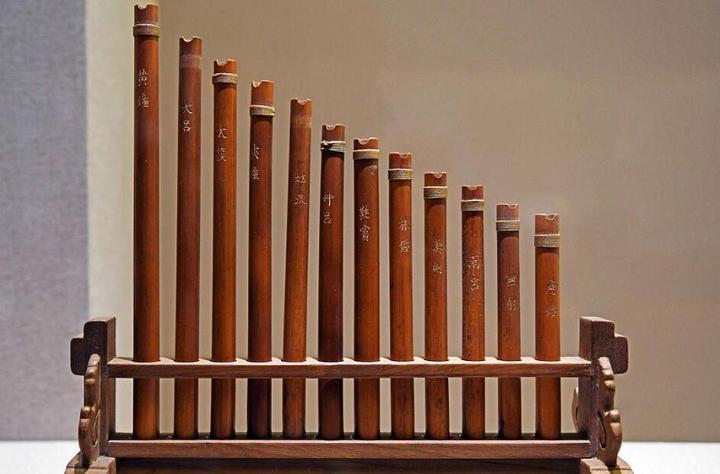
For those curious about Chinese music, two key ideas stand out: the pentatonic scale and the Twelve Lǜ.
The pentatonic scale is a set of five notes with fixed intervals, like do–re–mi–sol–la in Western solfège but without fa or ti. It’s the soul of many Chinese melodies—think of folk songs such as Jasmine Flower, which feels bright and smooth because it skips half-steps.
The Twelve Lǜ act as a pitch ruler. Ancient Chinese musicians tuned instruments to these 12 fixed pitches, just as we use A=440Hz today for standard tuning.
To play Chinese music, we combine both: the Lǜ fix the absolute pitch (like 1=C in numbered notation), while the pentatonic scale defines the step pattern (like the 1–2–3–5–6 relationship). It’s similar to choosing 1=E in Western numbered notation—changing the base pitch shifts the key, but the interval pattern stays.
This blend of fixed pitches and flexible scales gives Chinese music its unique, flowing charm, easy to appreciate even without deep theory!