Grotto Art: The Architecture and Murals of the Dunhuang Mogao Caves
Imagine a museum carved directly into a desert cliff, holding over a millennium of continuous artistic creation. Nestled along China’s ancient Silk Road, the Mogao Caves are a breathtaking masterpiece of Buddhist grotto architecture. Much like the rock-cut city of Petra or the frescoes of the Sistine Chapel, these sanctuaries were designed for faith, reflection, and vivid storytelling.
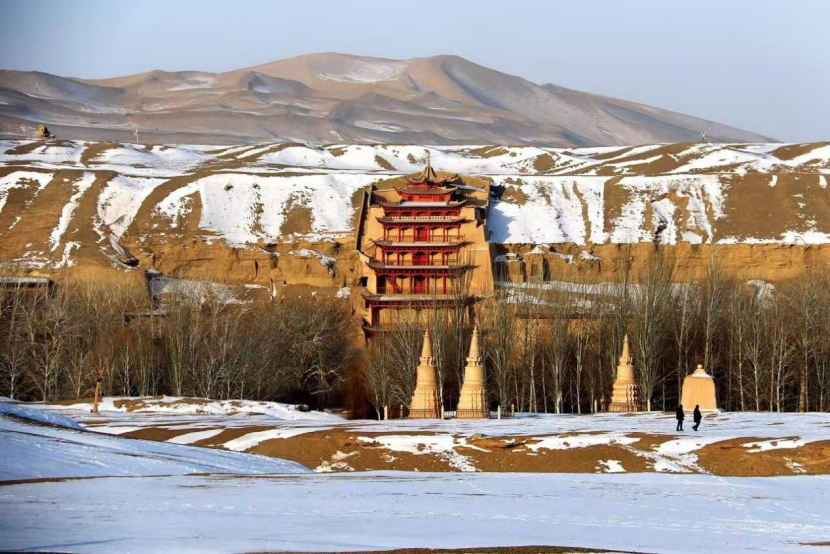
Spanning the 4th to 14th centuries, the complex looks like a colossal honeycomb against the cliff face, featuring 735 surviving caves. Instead of building standalone temples, ancient craftsmen painstakingly hollowed out the gravel rock. They designed small, secluded cells for monks to meditate, alongside massive caverns for public worship. To protect these sacred interiors from desert winds, they added intricate wooden facades and balconies to the cliffside, seamlessly blending structural engineering with religious devotion.
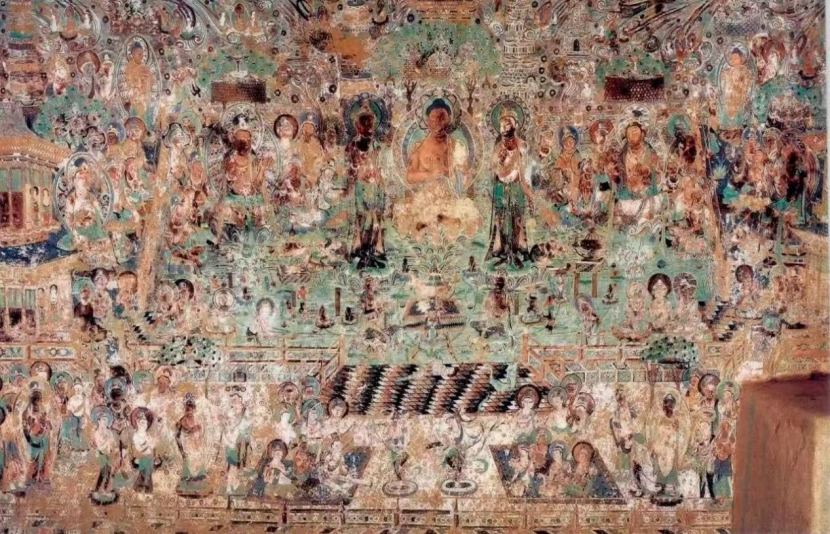
Inside lies a vibrant visual encyclopedia: over 45,000 square meters of intricate murals and 2,000 painted sculptures. Just as Renaissance art captured its era, Dunhuang’s walls vividly depict everything from graceful flying Apsaras (heavenly beings) playing lutes to bustling Silk Road merchants trading goods. Because Dunhuang was a vital oasis connecting China, India, Central Asia, and the West, the art reflects an incredible global fusion. You can even find rich pigments like lapis lazuli imported from Afghanistan—proof of a cosmopolitan hub long before modern globalized cities existed.
For visitors today, exploring the Mogao Caves is like opening a beautifully painted time capsule. It offers a rare, immersive glimpse into how ancient civilizations blended art, spirituality, and architecture. A true testament to human imagination, Dunhuang turned a barren desert into an eternal cultural masterpiece.