Architect of Memories: The Sustainable Vision of Wang Shu
Imagine a modern museum that looks like a rugged mountain fragment rising from a pebble beach, built almost entirely from the rubble of demolished villages. Designed by Pritzker-winning architect Wang Shu and his partner Lu Wenyu, the Ningbo Museum is a masterpiece of New Vernacular architecture. Fans of the renowned sci-fi series Three-Body might even recognize its striking facade as the Asian Defense Operation Center.
Much like how Antoni Gaudi integrated local Catalan traditions into his distinct modernism, Wang and Lu blend contemporary geometric forms with ancient Chinese craftsmanship. From a distance, the lower half of the 30,000-square-meter building is a strictly defined, solid rectangular box. Yet, as you get closer, the upper section splits and cracks into irregular mountain-like shapes. Hidden on the roof is a wide platform where four distinct geometric clefts offer panoramic views of the city and distant mountains.
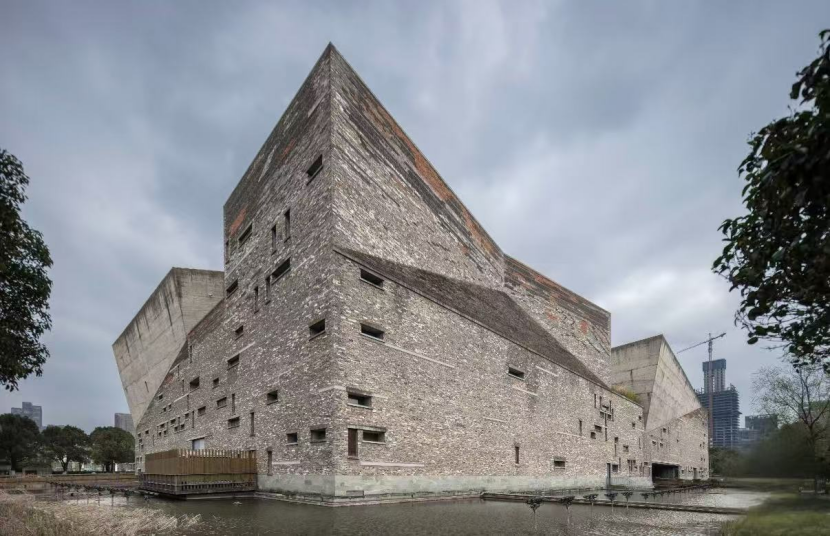
The building serves as a physical archive of local history. Its iconic 24-meter-high walls are constructed using over 20 types of recycled bricks and clay tiles salvaged from regional urban renovations. Wang notes that these materials carry centuries of memories, echoing a museums true mission to collect history. Alongside these heritage bricks, the architects innovatively poured concrete into custom bamboo molds. The unpredictable, natural textures of the splitting bamboo beautifully soften the rigid concrete, paying homage to the botanical roots of the Jiangnan region.
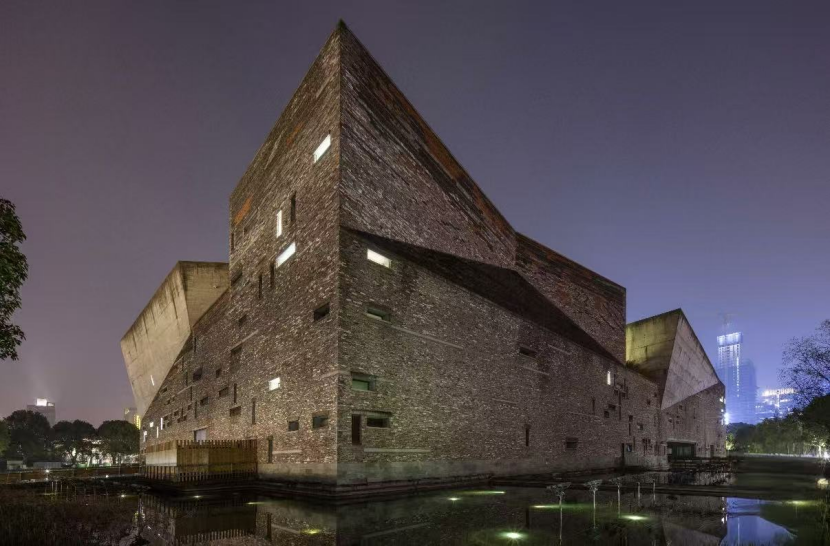
For visitors today, exploring the Ningbo Museum offers a deeply moving experience. It shows how modern infrastructure can profoundly respect the past, breathing new life into forgotten materials and proving that true innovation often lies in honoring our cultural roots.