Si He Yuan – The 3,000-Year-Old Chinese Courtyard That Shaped Family and Community Life
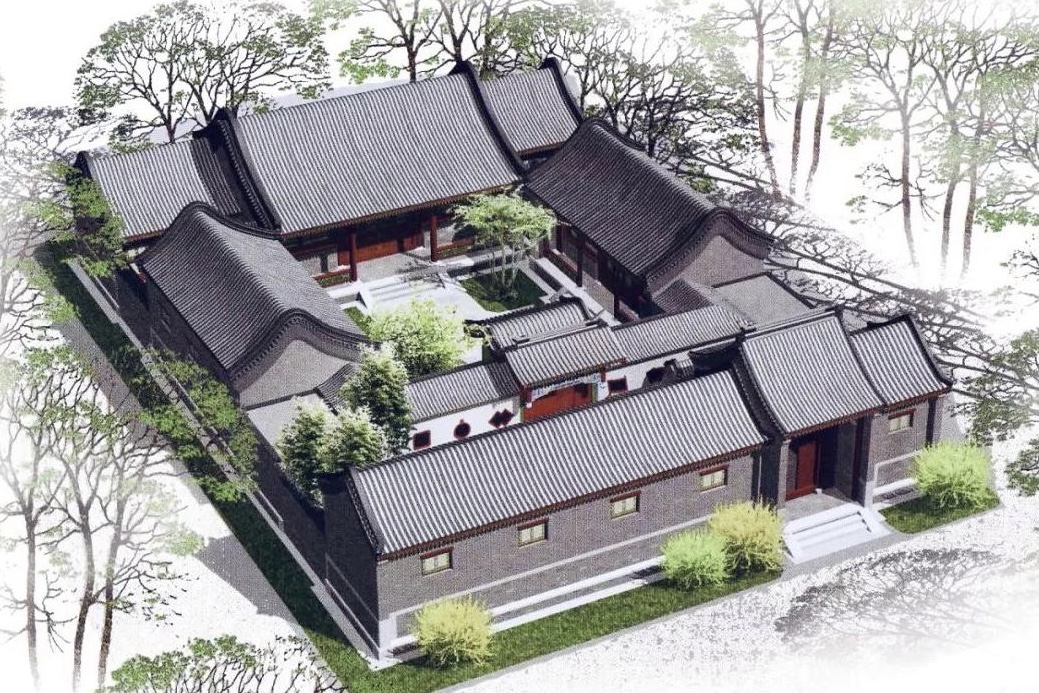
Si He Yuan, or courtyard surrounded by buildings on all four sides, is a traditional Chinese style of architecture. Complete versions of Si He Yuan have existed in China for over 3,000 years. Due to varying geographical and climatic conditions, Si He Yuan display distinct forms in different regions. Beijing’s Si He Yuan are the best-known example of this architectural style.
A Si He Yuan is a family-based dwelling with a square courtyard in the center. It emphasizes symmetry, with clear functions and partitions. It consists of a main house for family elders, which is typically positioned to the north and south-facing with a large living room, and side houses for younger family members. There are also guest rooms, kitchens, servants’ quarters, and storage rooms.
A Si He Yuan typically features only one entrance, which is normally located on the southeast side rather than in the center of the courtyard. A screen wall is often placed behind the entrance for beautification and privacy purposes. The doors of the rooms inside a Si He Yuan all face the courtyard, emphasizing family unity and harmony.
The courtyard is often decorated with plants, trees, bird houses, fish tanks, and rock formations, creating a serene and peaceful environment. The idea of the basic layout of the courtyard dwelling has influenced the formation of social networks in China from extended families to neighborhoods to larger communities.
As a residential architectural form, Si He Yuan can serve as a simple, ordinary dwelling or a grand palace for royals and nobles. The feng shui principles incorporated into its architecture are a fundamental aspect of traditional Chinese architectural theory. Si He Yuan decorations, carving, and painting reflect traditional culture and folk customs, expressing people’s pursuit of a happy and beautiful life.
This piece is compiled from the Keywords to Understand China compiled by China International Communications Group, Academy of Contemporary China and World Studies and China Academy of Translation.