
Desheng Gate – Beijing's Military Gate
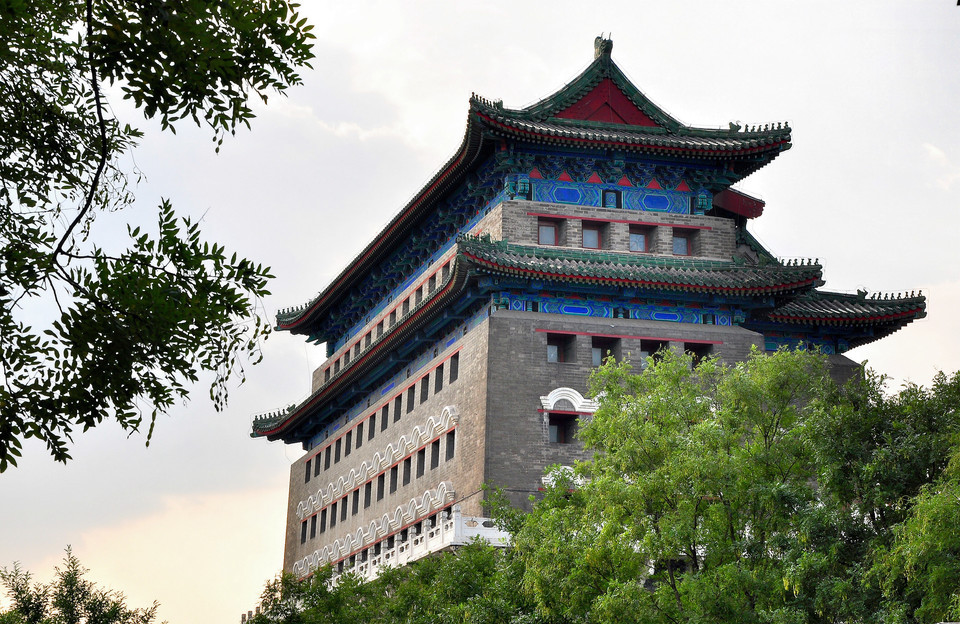
In traditional Chinese cosmology, the northern direction was associated with military affairs. As a result, troops departing for battle would leave the city through Desheng Gate. Among ordinary people, Desheng Gate was known as the Military Gate. Its name, Desheng, sounds like a phrase meaning "achieving victory", symbolizing the hope that an army would score an early victory upon setting out.
Between 1436 and 1439, during the Zhengtong period of the Ming dynasty, the imperial court began a large-scale project to rebuild Beijing's nine inner-city gates. Desheng Gate was one of them. A complete military defense system was constructed, including the gate tower, archery tower, barbican and sluice gate tower.
The archery tower was completed in 1439, the fourth year of the Zhengtong period. Facing south, it features a double-eaved xieshan (hip-and-gable) roof covered with gray cylindrical tiles and trimmed with green glazed tiles. The tower has four levels, with 48 arrow windows on the north side and 17 on each of the east and west sides, for a total of 82 openings for firing arrows. The city platform is 12.6 meters high, while the archery tower itself stands 19.3 meters tall, making the entire structure more than 30 meters high. Viewed from below, it creates an imposing and overwhelming impression. The barbican connected the archery tower with the main gate tower, while the sluice gate tower controlled passage in and out.
In 1969, during the construction of the subway, the city walls around Desheng Gate were demolished, leaving only the archery tower and parts of the barbican walls. The Desheng Gate archery tower is one of the few surviving ancient archery towers in Beijing and an important physical source for the study of ancient Chinese military defense systems. In 1982, the Desheng Gate Archery Tower Cultural Relics Preservation Office was established and the site was opened to the public. It is now home to the Beijing Ancient Coins Exhibition Hall.