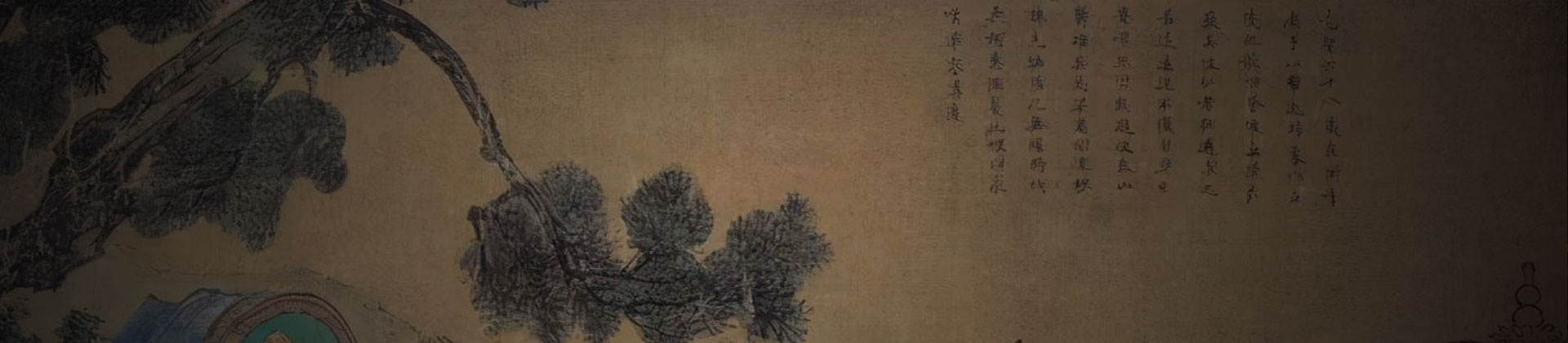
Du Mu’s Poem for Zhang Haohao – The Only Surviving Tang Dynasty Poetic Calligraphy Masterpiece

Du Mu (803–852), courtesy name Muzhi, was a renowned poet and calligrapher of the late Tang Dynasty. Du Mu encountered a singing girl named Zhang Haohao by chance in Luoyang. Deeply moved by her turbulent life story, he immediately composed and transcribed the celebrated calligraphy scroll Poem for Zhang Haohao.
The scroll was written with a type of brush popular in the Tang Dynasty. Such brushes tended to absorb a great deal of ink, resulting in strokes that were not fully saturated. As a consequence, the ends of the brushstrokes often showed a mixed appearance of black and white. This is a distinctive characteristic of Tang Dynasty brushwork, and many characters in the Poem for Zhang Haohao scroll display this very phenomenon.
Emperor Huizong of the Song Dynasty praised Du Mu’s semi-cursive calligraphy for its vigorous and powerful style, and even ranked him among the nine leading poet-calligraphers of the Tang Dynasty. In the late Ming period, the great connoisseur Dong Qichang, after examining the Poem for Zhang Haohao scroll, regarded Du Mu as one of the top three calligraphers of the mid-to-late Tang period. This scroll is the only surviving calligraphic work by a Tang poet that has come down to us. During the Second Sino-Japanese War, the collector Zhang Boju risked his life to preserve it, and in 1956 he donated it to the nation. Thus, the Poem for Zhang Haohao scroll returned once again to the Forbidden City.