The Art of Iron Flowers
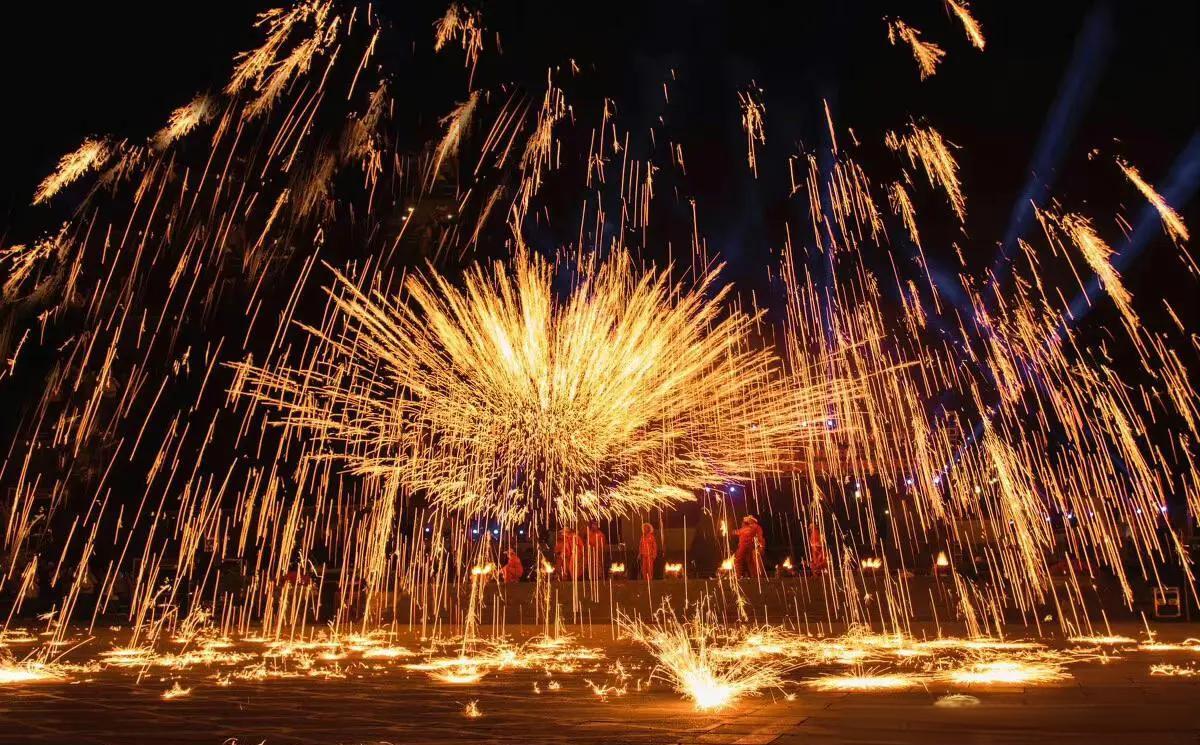
Iron Flower, or TieHua, is one of the most spectacular traditional folk arts in China. Originating in northern China more than a thousand years ago, it developed from ancient metalworking traditions. Craftsmen discovered that molten iron could create a magnificent visual effect when it was thrown into the air, producing thousands of sparks like blooming flowers. Unlike modern fireworks, Iron Flower relies on human skills and traditional techniques, making it a unique combination of craftsmanship, performance, and cultural expression.
The performance of Iron Flower requires courage, experience, and precise coordination. Performers heat iron to extremely high temperatures until it becomes liquid, then use special tools to strike or spread the molten metal against a wooden structure. When the iron particles fly into the night sky, they create golden waves of light. The timing, strength, and movement of performers determine the shape and beauty of the sparks.
Beyond its spectacular appearance, Iron Flower contains rich cultural meanings. In traditional Chinese culture, fire represents brightness, prosperity, and the hope for a better future. The performance is often held during festivals and celebrations, expressing people’s wishes for good fortune and happiness. It also reflects the creativity and wisdom of ordinary craftsmen.
Today, Iron Flower has become an important symbol of Chinese folk culture and cultural tourism. Through modern performances, museums, and digital media, this ancient art has attracted audiences from around the world. It shows how traditional skills can be preserved while gaining new forms of expression in contemporary society.