From Hubing to Shaobing: A Silk Road Food Tradition
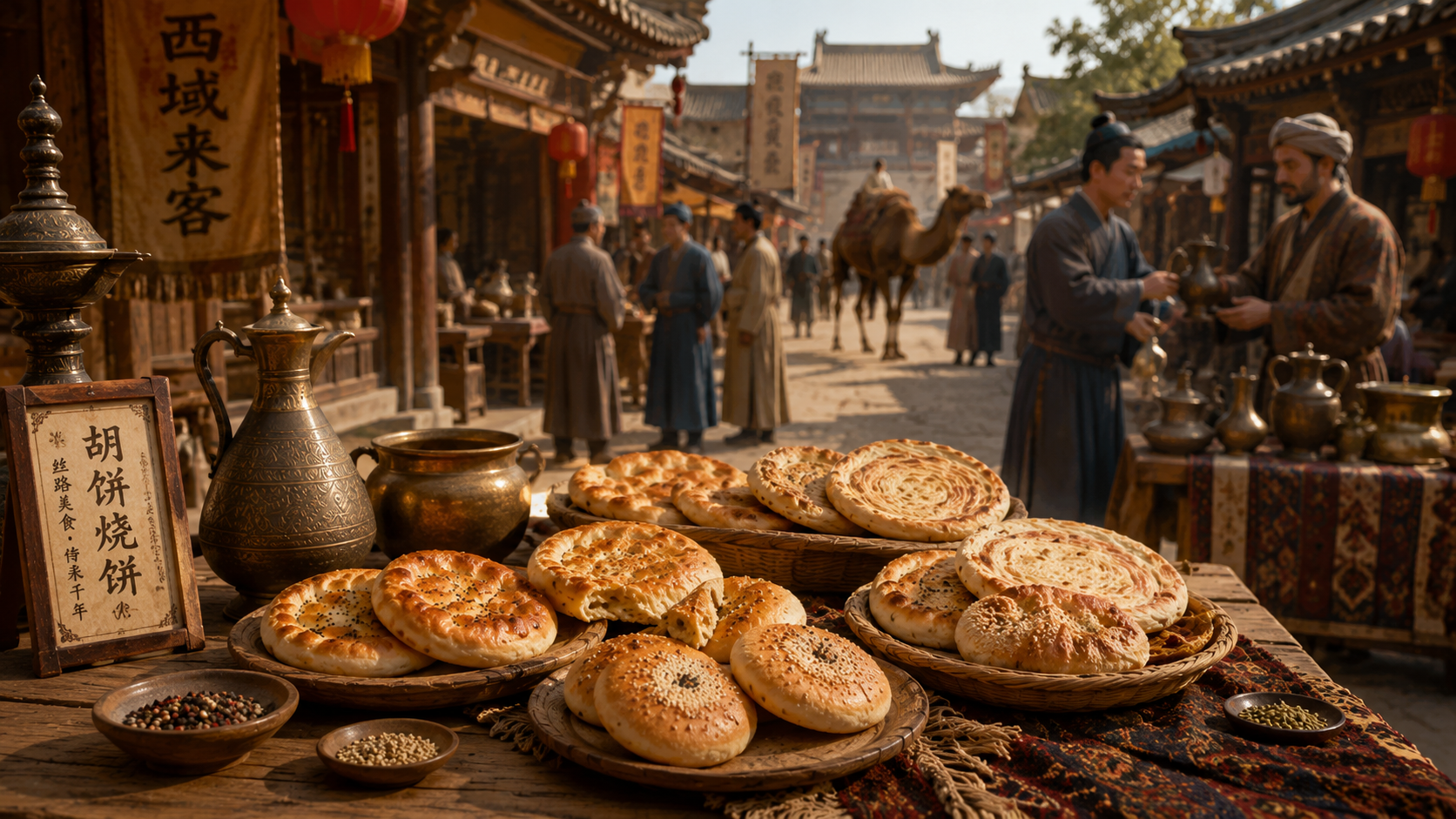
Hubing, literally foreign-style bread, entered the food culture of ancient China through exchanges along the Silk Road. Historical records show that this kind of baked wheat cake was already popular by the Eastern Han Dynasty and became especially fashionable in Tang cities. Merchants, travelers, and communities from Central and Western Asia brought new ingredients and baking practices to China, while Chinese cooks gradually adapted them to local tastes and dining habits.
Early hubing was usually round and baked in an oven or against the wall of a heated stove. Some varieties were covered with sesame seeds, filled with meat, or enriched with oil and spices. In cosmopolitan Chang’an, such foods were part of the wider popularity of hu-style music, clothing, and cuisine. Chinese bakers then combined these methods with local wheat-growing traditions, changing the dough, seasonings, shapes, and cooking equipment.
Over time, hubing developed into many forms of shaobing (baked flatbread) found across China. Some are crisp and layered, while others are soft, chewy, sweet, salty, or stuffed. Sesame shaobing, clay-oven breads, and regional flatbreads all preserve traces of this long process of adaptation. Their diversity shows that cultural exchange rarely produces a simple copy; instead, imported techniques are repeatedly reshaped by local ingredients, climates, and preferences.
Today, shaobing is regarded as an everyday Chinese food rather than a foreign novelty. It appears at breakfast stalls, family tables, and traditional markets, and it may be eaten alone or paired with meat, soup, and vegetables. Its journey from hubing to shaobing demonstrates how the Silk Road influenced ordinary life and how an introduced food could become a lasting part of Chinese regional culture.