Xuan Paper Making Technique
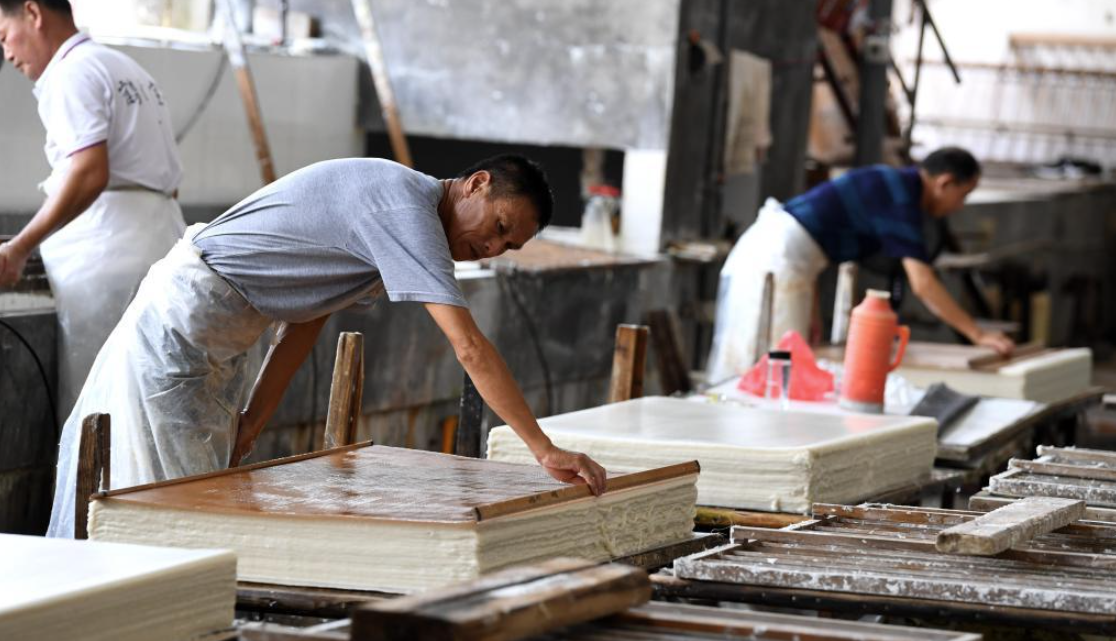
Xuan paper represents the pinnacle of traditional Chinese handmade paper and serves as the essential medium for calligraphy and ink painting. Produced in Jing County, Anhui Province, this craft has been practiced for over 1,500 years.
The paper's quality comes from its unique materials and process. It uses the bark of the wingceltis tree and sand-field rice straw—both native to Jing County—through more than 140 production steps. Local water is equally vital: the two tributaries of the Wuxi River are perfectly suited—one mildly alkaline for processing raw materials, the other mildly acidic for papermaking.
Xuan paper is pure white, fine-textured, soft yet resilient. It resists insects and moisture, preserving documents for centuries—hence the saying "paper that lasts a thousand years." What truly sets it apart is its remarkable ink-absorbing property, which allows brushstrokes to reveal subtle gradations and artistic depth. As scholar Guo Moruo wrote, "Chinese calligraphy and painting would lose their artistic essence without it." In 2009, Xuan paper making was inscribed on the UNESCO Representative List of the Intangible Cultural Heritage of Humanity.