Hui Ink Stick Making Technique
The invention of Chinese ink sticks was a major contribution of Chinese civilization to the world, and Hui ink stands as the pinnacle of this craft. Its production can be traced back to the late Tang Dynasty, reaching its golden age through the Song, Yuan, Ming, and Qing dynasties.
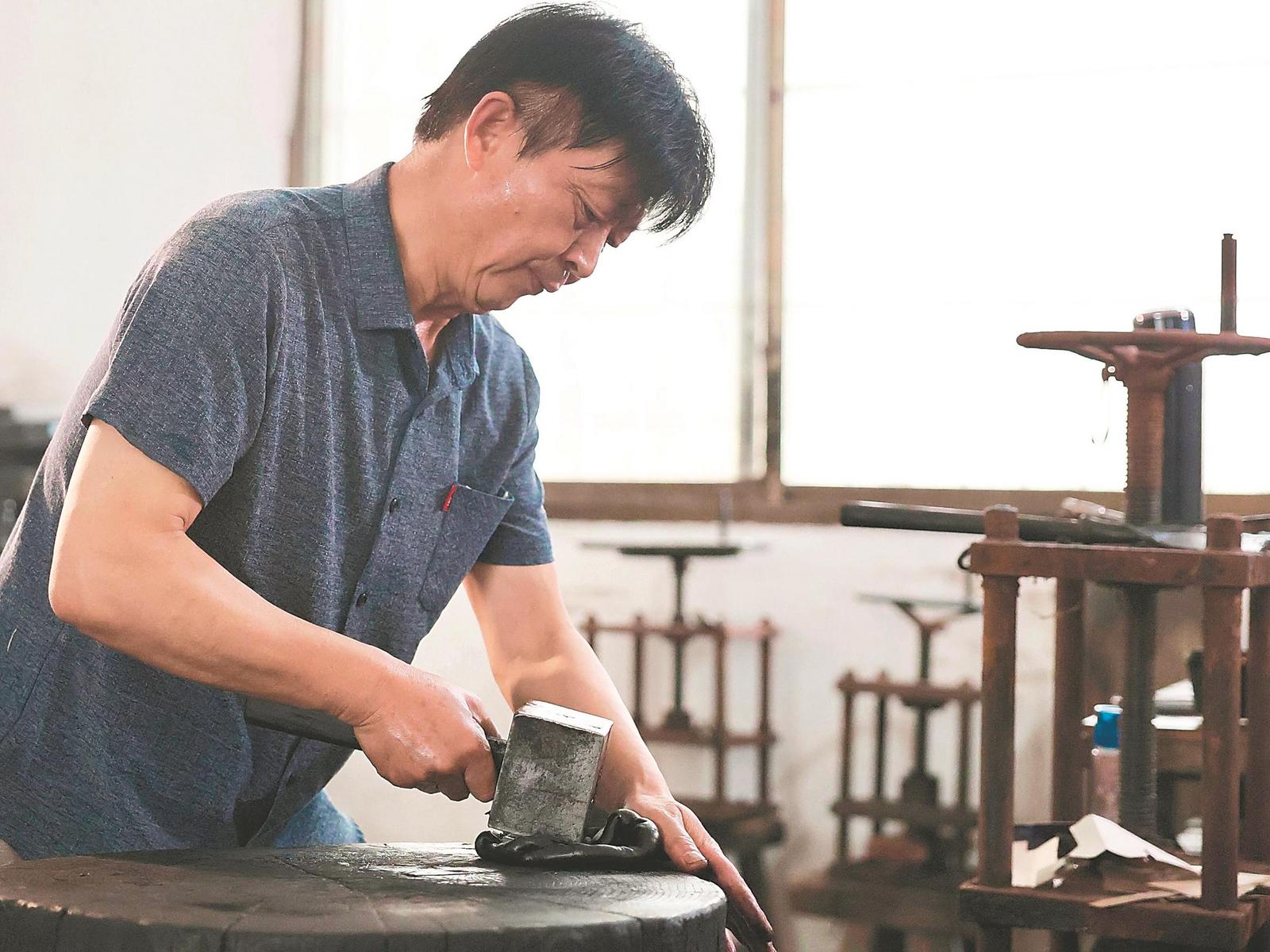
What sets Hui ink apart is its sophisticated process and premium ingredients. The production involves smoke collection, glue mixing, kneading, molding, drying, and gold decoration. Different raw materials, such as tung oil, flaxseed oil, or pine soot, require distinct collection and refining methods, closely guarded by individual schools of craftsmen.
The finished ink stick is "light to hold, clear to grind, and fragrant to smell". It is "as hard as jade, with grain like rhinoceros horn", and when ground on an inkstone, it produces a deep, lustrous black that "lasts ten thousand years without fading". As an old saying goes, "A single ink stick was worth ten thousand coins." Beyond its function, Hui ink is also a work of art in its carving and decoration, embodying the Chinese artisan's relentless pursuit of material perfection and aesthetic beauty.