Qu Yuan and the Songs of Chu: The Birth of Chinese Romantic Poetry
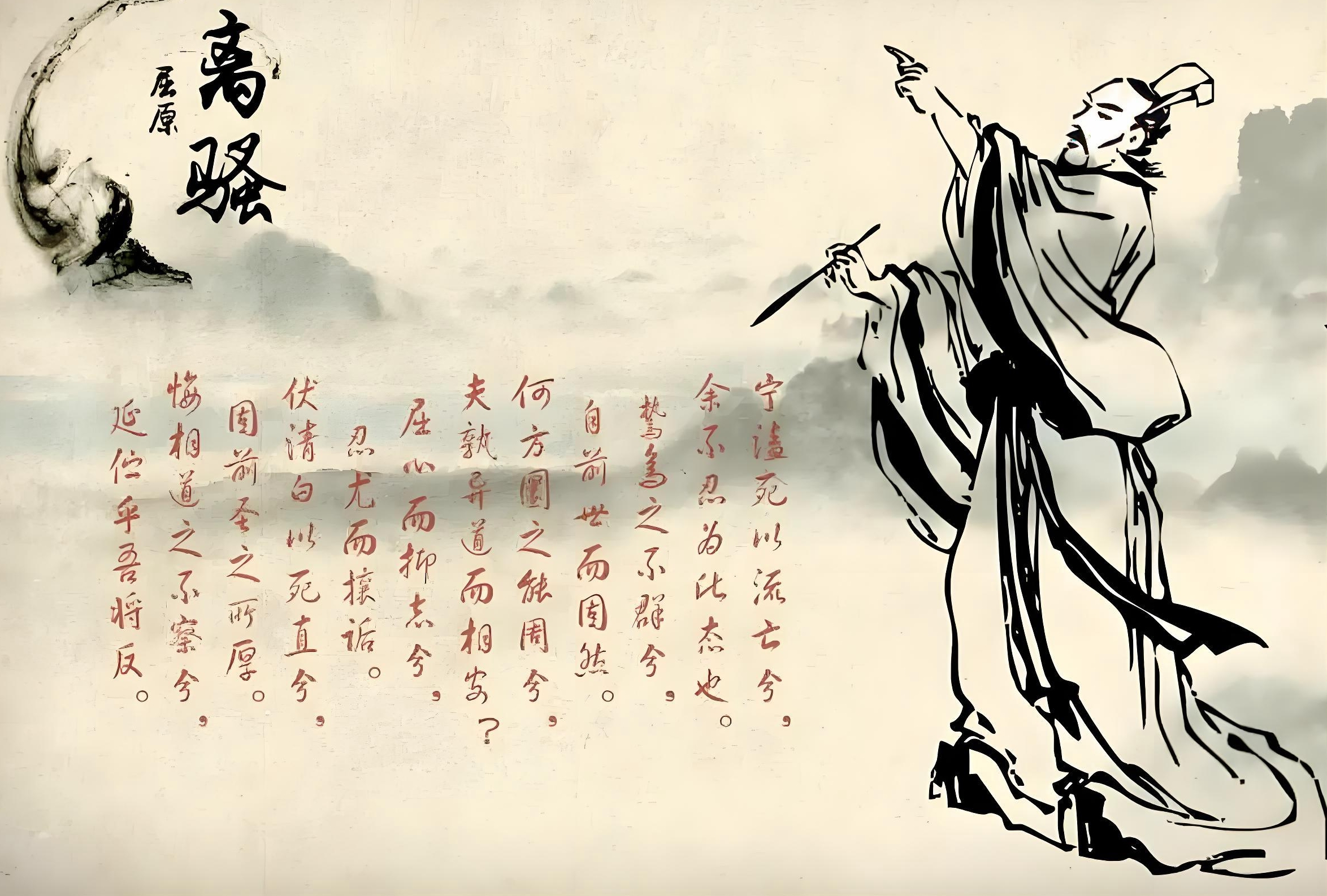
The Songs of Chu (楚辞, Chu Ci) is one of the earliest and most influential collections of Chinese poetry, associated above all with the poet Qu Yuan (屈原, c. 340–278 BCE). Unlike the restrained folk songs of the Book of Songs, the Chu Ci is rich with fantasy, intense emotion, and vivid imagery drawn from the mythology of the ancient southern state of Chu. It represents the beginning of a romantic tradition in Chinese literature that would shape poetry for centuries.
Qu Yuan was a nobleman and court official in the state of Chu during the Warring States period. Loyal to his king but slandered by rivals, he was eventually exiled. His grief found expression in a series of extraordinary poems, the most celebrated of which is Li Sao (离骚), often translated as Encountering Sorrow. In this long lyric poem, Qu Yuan describes a spiritual journey through mythological landscapes, searching for a worthy ruler and lamenting corruption. The poem is filled with fragrant orchids, soaring dragons, and heavenly maidens — a world of heightened beauty set against profound despair.
According to tradition, after learning that his state of Chu had fallen to the kingdom of Qin, Qu Yuan waded into the Miluo River (汨罗江) and drowned himself in protest and mourning. His death is commemorated every year on the fifth day of the fifth lunar month — the Dragon Boat Festival (端午节) — when people race dragon boats and throw rice dumplings (粽子) into the water to honor his memory.
The Chu Ci established a new poetic style — more expansive, lyrical, and emotionally intense than earlier Chinese verse. Its influence can be felt in Tang Dynasty poetry, in the romantic imagination of countless later writers, and in the enduring figure of Qu Yuan himself, who remains a symbol of loyalty, integrity, and the courage to speak truth to power.