Zheng Xie's Chrysanthemums by the Sweet Valley Spring
Chrysanthemums by the Sweet Valley Spring is a masterpiece by the Qing Dynasty painter Zheng Xie (art name Banqiao). As a leading figure among the unconventional Eight Eccentrics of Yangzhou, Zheng Xie used brush and ink to express his distinctive character. This painting perfectly embodies his artistic ideal of unifying poetry, calligraphy, and painting.
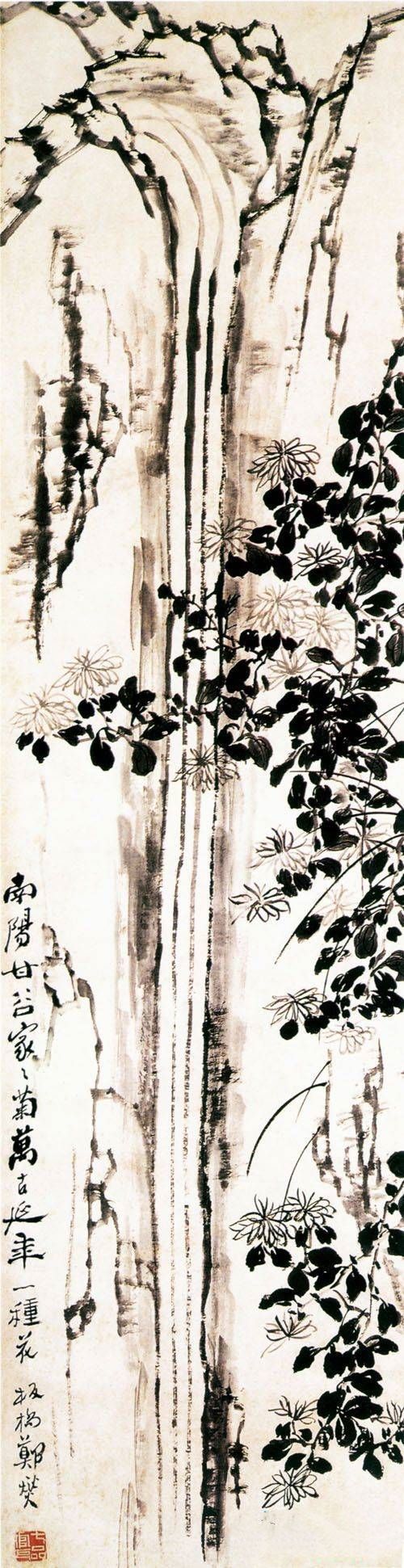
A master calligrapher, Zheng Xie innovatively infused the techniques and dynamism of writing into his paintings. In this work:
Painting as Writing: The brushstrokes defining the chrysanthemum leaves and rocks are charged with a calligraphic rhythm and strength, making the lines appear both freely expressive and powerfully structured.
Writing as Painting: The poems he inscribed on the painting are written in a distinctive style where characters vary in size and are arranged in a seemingly scattered yet harmonious pattern, akin to paving a street with irregular stones. This integrates the text visually with the imagery of flowers and spring, forming a complete composition.
Expressing Heart and Mind: His inscriptions often directly convey his love for nature or his views on society, turning the painting not merely into a landscape but into a personal manifesto of his thoughts and emotions.
Later Influence: The Awakening of Individuality
The art of Zheng Xie and his fellow Eccentrics was a bold rebellion against the prevailing trend of slavishly imitating ancient masters. They elevated subjects from everyday life into the realm of refined art and placed supreme emphasis on the artist's personal expression. This spirit of "painting one's own true character" greatly inspired later artists, such as the modern master Qi Baishi, and helped steer Chinese painting toward a more individualistic and vibrant modern style. Zheng Xie is thus regarded as a crucial pioneer of personalized expression in the history of Chinese art.