
Nature and Harmony through a Scholar’s Brush
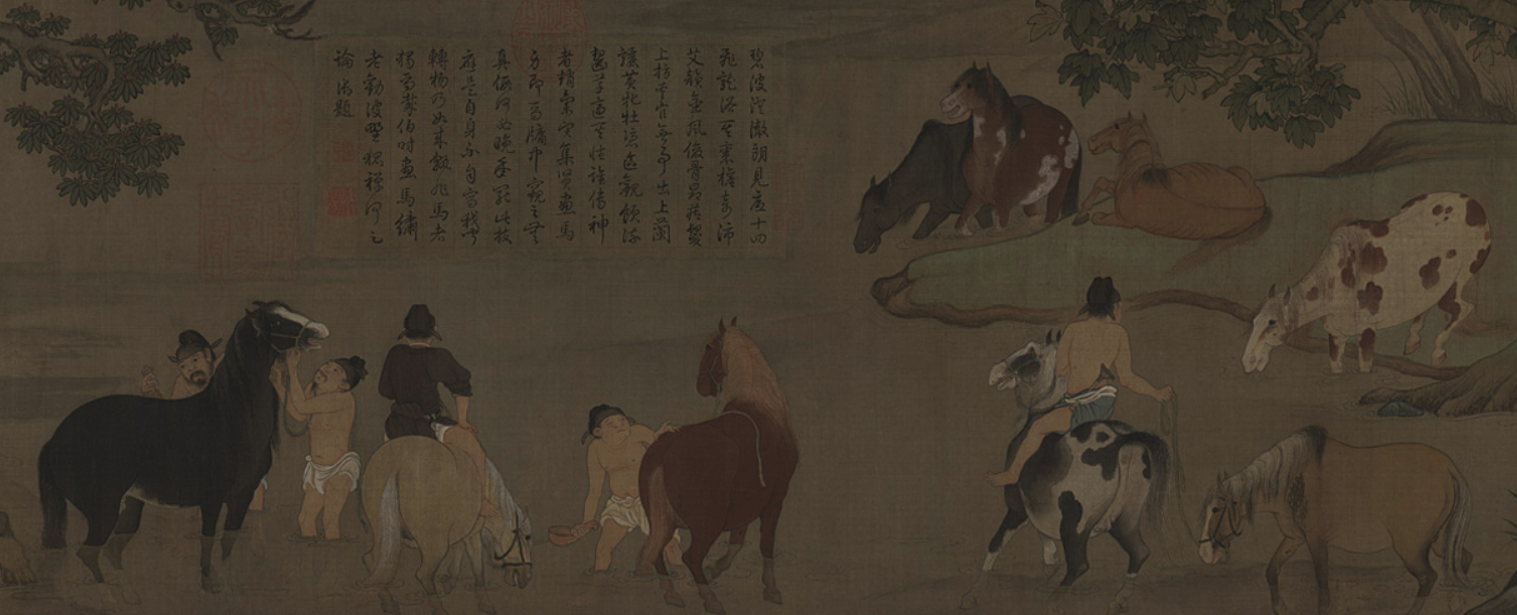
In the long history of Chinese art, the image of the horse underwent a transformation from the battlefield to the scholar's studio. The horses painted by the great Yuan Dynasty artist Zhao Mengfu (1254-1322) embody tranquility and refined elegance in Chinese art. As a towering figure in the Yuan Dynasty art world, Zhao was known for his advocacy of returning to the classical styles of the Tang and Northern Song dynasties.
His masterpiece, Bathing Horses, depicts a serene summer scene by a stream. Several grooms are washing a dozen magnificent horses. The composition is masterfully balanced, with the figures and animals in perfect harmony. The horses are captured in a variety of relaxed poses: some play in the water, others rest on the bank, one just emerges dripping wet, and another turns its head to scratch itself, perfectly capturing their leisurely demeanor. The grooms are equally absorbed in their tasks, their expressions calm and focused.
Zhao’s painting style is meticulous and elegant. The horses are anatomically precise, rendered with smooth, flowing ink lines and filled with subtle, antique colors. The scene is both realistic and idealized. For Zhao, a scholar-official, painting horses was not just about depicting animals; it was a way to express a personal ideal—a longing for a life of peace, away from the political turmoil of the court. The painting’s atmosphere of quiet contentment and harmony between humans, animals, and nature is a perfect example of the artistic conception (yijing) so highly prized in Chinese scholar painting.