An Unfading Language of Ink

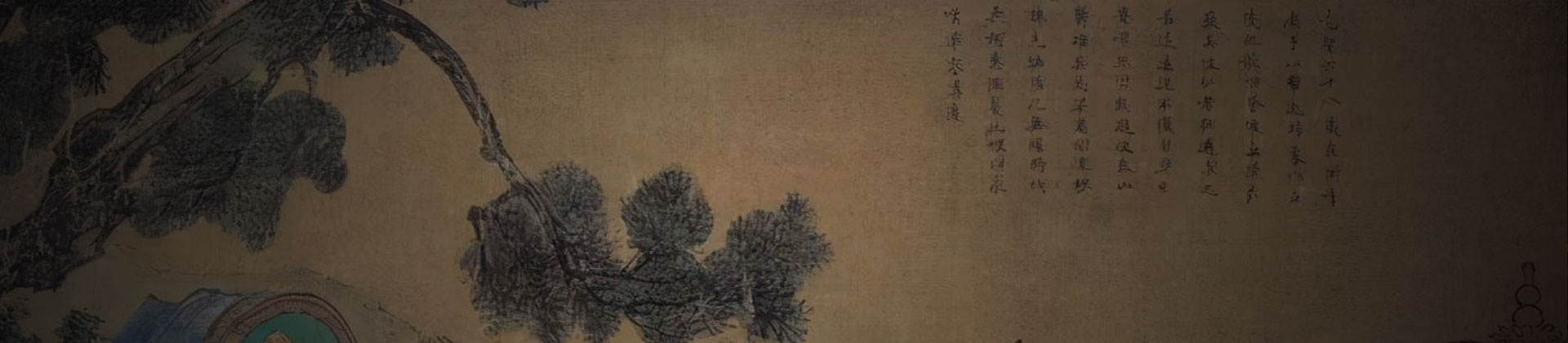
Bada Shanren's distinctive artistic style is vividly reflected in works on show, including Landscape after Wen Jia. CHINA DAILY
For Huang E'xian, 36, from Foshan, Guangdong province, Bada Shanren first appeared not in a museum, but on the Chinese video platform Bilibili. She came across his paintings around 2019, when she was going through a series of setbacks. What caught her attention were the strange birds and fish staring upward with their distinctive "white eyes".
"He didn't follow the crowd," she says. "The creatures he painted have a spirit of their own. I feel he was painting himself: the white eyes were a way he looked at the world."
This summer, after following Bada for years, she traveled to Nanchang, capital of Jiangxi province, for the first time, specifically to see an exhibition marking the 400th anniversary of his birth.
Her experience is part of a wider revival of interest in Bada.
Bada Shanren (1626-1705), also widely known as Zhu Da, was a descendant of the Ming imperial family in Nanchang. He began using Bada Shanren as his artist name in 1684.
Zhou Xiaojian, director of the Bada Shanren Memorial, describes him as a pivotal figure in Chinese art history whose highly individual style brought xieyi, freehand ink painting, to a new height and influenced generations of artists.
The collapse of the Ming Dynasty (1368-1644) changed the course of Bada's life. He later entered a Buddhist monastery, spent more than three decades as a monk, and eventually returned to secular life.
In his paintings, Bada's personified fish, birds, deer and cats have also increasingly become memes on Chinese social media, used by some young people to express workplace pressure and social anxiety. His restrained brushwork and sparse compositions offer a sense of respite from modern life.
That interest is now visible inside museums.