Chuiwan – China's Ancient "Golf"
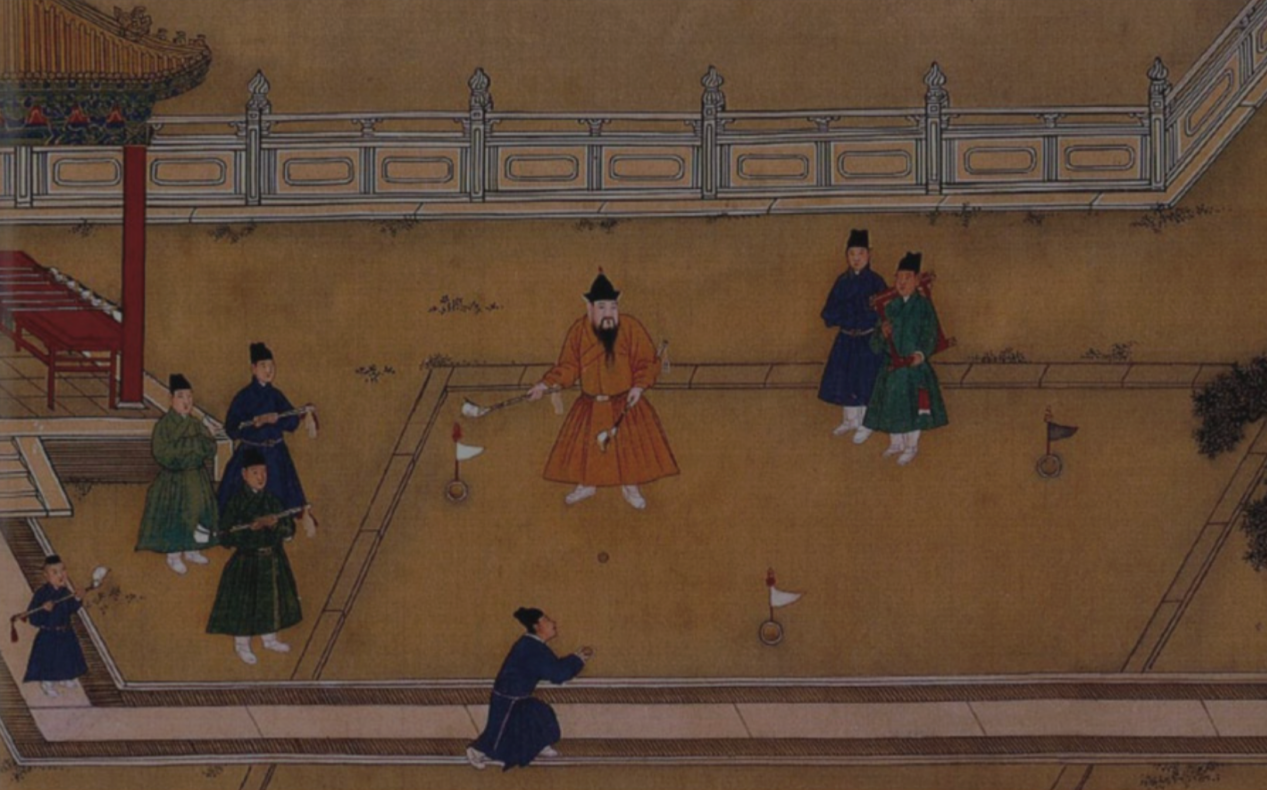
As early as the 13th century, China already had a ball game strikingly similar to modern golf—it was called chuiwan. The forerunner of chuiwan was buda, a game in which players used a club to strike a ball towards a target. By the Song and Yuan dynasties, the sport had officially become known as chuiwan and rapidly developed into a mature pastime.
Chuiwan was immensely popular throughout the Song, Jin, and Yuan dynasties, captivating everyone from emperors and high-ranking officials to ordinary people. According to the Treatise on Rites in the History of Song, every year in the third lunar month, Emperor Taizong of Song personally presided over a ceremony in which court officials and performers took part in chuiwan activities.
The balls used in chuiwan were typically made from zhuimu—the knotted growths found on tree trunks. This type of wood was exceptionally hard and durable, able to withstand repeated striking without breaking. In addition to wooden balls, some were also crafted from animal horn or bone.
As for the playing field, chuiwan required both flat, open ground and rough, uneven terrain, with obstacles such as sand pits, depressions, and ditches—a layout remarkably similar to that of a modern golf course.
By the early Yuan dynasty, chuiwan had already developed a comprehensive system of competition rules, course design, equipment standards, and team competitions. A 32-chapter treatise entitled Wanjing (Classic of Chuiwan) covers everything from match rules and swing techniques to club-making and course maintenance, earning it the reputation of an encyclopedia of the sport. This was fully 472 years earlier than the formal codification of golf rules in Britain.