Lusheng: The Sound of Festivals in China’s Ethnic Villages
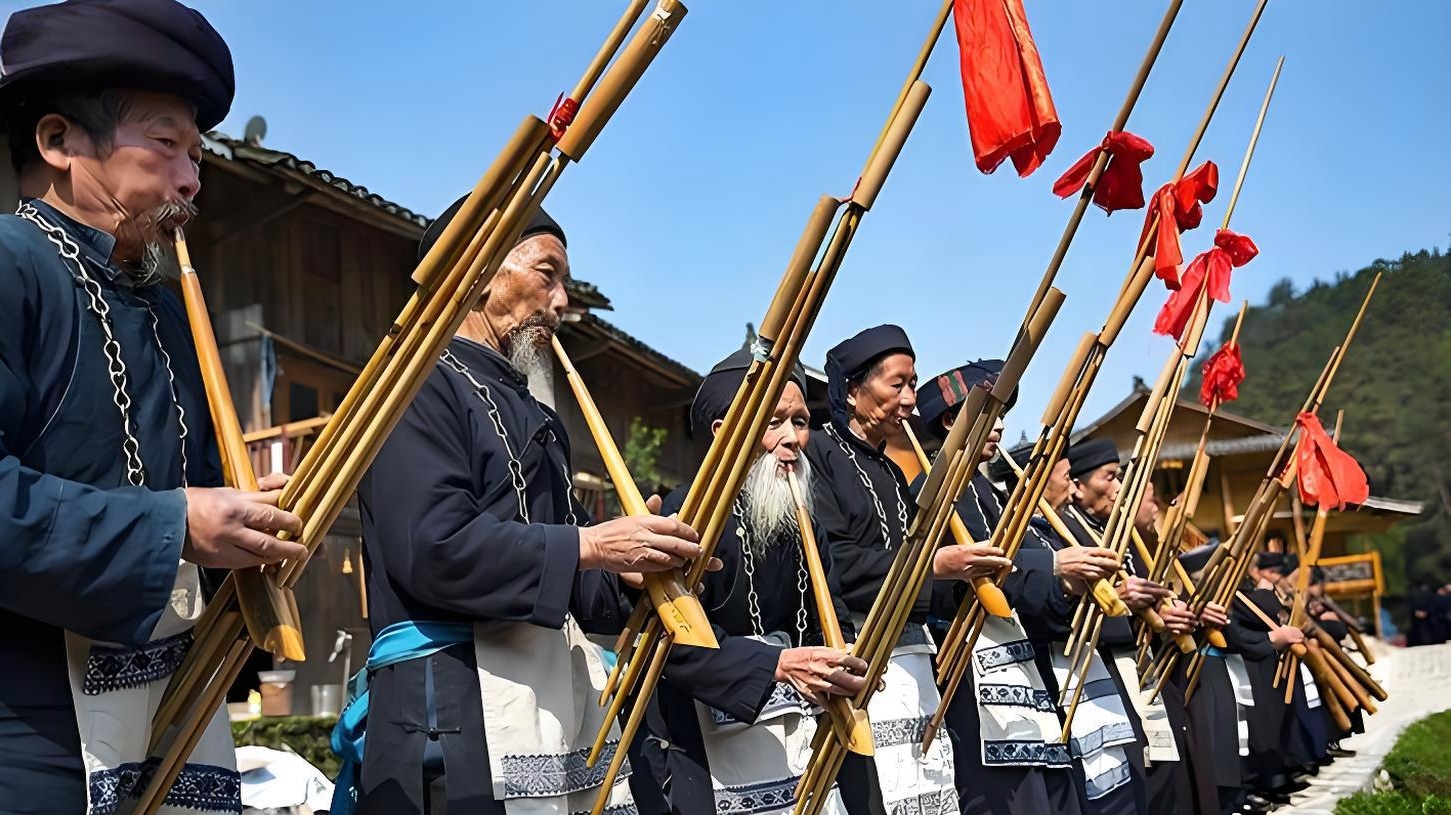
The Lusheng(芦笙) is one of the most distinctive traditional instruments of China’s ethnic minorities, especially among the Miao and Dong peoples. Made of bamboo pipes fitted into a wooden wind chest, it produces a bright, reedy sound that is both lively and deeply rooted in community life. More than a musical instrument, the Lusheng is often part of festivals, courtship, dance, and collective celebration.
What makes the Lusheng especially fascinating is the way music and movement come together. It is often played while performers dance, turning sound into a visible rhythm of the body. In Lusheng festivals, groups gather in traditional dress, and the music fills open squares and village grounds with energy. In some ways, it resembles the role of bagpipes or folk wind instruments in other cultures: not just for performance, but for identity, memory, and public celebration.
The Lusheng is also closely tied to social life. Traditionally, it has played a role in gatherings where young people meet, sing, and dance. Its melodies can be joyful, welcoming, and sometimes even gently competitive, as different groups or players display their skill and style. This makes the Lusheng not only an instrument of sound, but also an instrument of connection.
Today, the Lusheng remains a vivid symbol of ethnic musical culture in China. Whether heard during festivals or seen on stage, it carries with it the spirit of mountain villages, shared celebration, and living tradition. For anyone hoping to understand the diversity of Chinese music, the Lusheng offers a sound that is both festive and unforgettable.