
Dougong: The Shock Absorber of Ancient Chinese Architecture
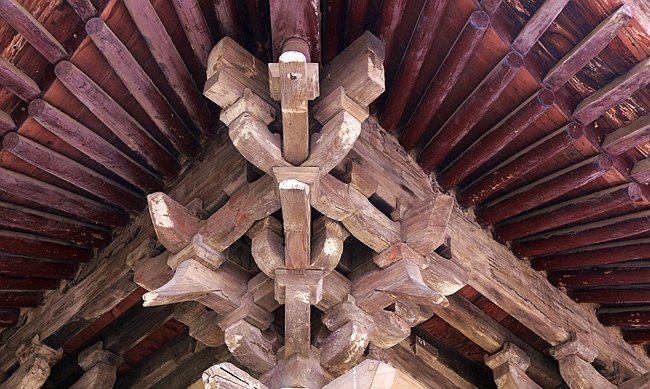
Imagine a LEGO set that can withstand earthquakes—that’s how ingenious China’s dougong (斗拱) system is. This interlocking wooden bracket, dating back over 2,000 years, acts like a building’s shock absorber. Instead of rigidly stacking beams, dougong uses a network of layered blocks (dou) and arms (gong) to distribute weight and absorb seismic shocks. Think of it as the suspension system in a car: when earthquakes hit, the flexible joints move slightly but keep the structure intact.
A famous example is the Tang Dynasty Giant Wild Goose Pagoda in Xi’an. Despite enduring hundreds of quakes, including a major one in 1556, its 64-meter-tall brick body remains standing—thanks partly to hidden dougong-like wooden cores. Modern engineers even study it for earthquake-resistant designs.
Globally, dougong parallels techniques like Italy’s ancient corbel arches or India’s jali latticework, but with unique adaptability. While Gothic cathedrals relied on thick walls, Chinese architects used dougong to create airy, towering halls (e.g., Beijing’s Forbidden City) without heavy reinforcement.
Next time you see ornate eaves on a Chinese temple, remember: those intricate wooden puzzles aren’t just decoration—they’re centuries-old seismic genius. A blend of art and engineering, dougong turns buildings into survivors.