Calligraphy and Zen: Their Fusion and Artistic Expression
Calligraphy and Zen Buddhism share a profound bond—much like how meditation complements yoga, or jazz improvisation reflects spiritual freedom. Their fusion turns writing into a practice of mind and spirit, with unique artistic expressions.
The Fusion of Calligraphy and Zen
Zen emphasizes mindfulness and living in the moment, ideas familiar to anyone who practices meditation or mindfulness globally. For calligraphers, holding the brush becomes a form of Zen practice: they clear their minds, focus solely on each stroke, and let intuition guide movement—no overthinking, just pure connection between hand, brush, and paper. This is similar to how Zen monks meditate to quiet the mind; calligraphy becomes a "moving meditation," blending action and awareness.
Artistic Expressions
Spontaneity: Zen-inspired calligraphy avoids rigid planning. Strokes flow freely, like a jazz musician’s improvised solo, capturing the artist’s instant mood. Some works even have "imperfect" lines—much like wabi-sabi in Japanese art, celebrating natural flaws.
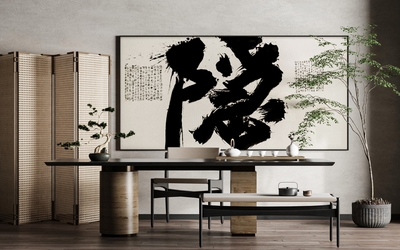
Simplicity: Designs are often minimal, with empty space (white paper) as important as ink. This echoes Zen’s love for simplicity, similar to how minimalist Western art uses negative space to evoke calm. A single character, written with bold, unhurried strokes, can convey deep peace.
Spiritual Resonance: The art doesn’t just look beautiful—it feels meditative. Viewers often sense a quiet energy, like standing in a peaceful garden or listening to soft instrumental music. It’s a universal language of calm, transcending cultural barriers.
This fusion makes calligraphy more than art—it’s a spiritual journey, where every brushstroke is a moment of Zen.